
Contact Us

Phone
08 8294 8664

Email
sale@awdmedical.com

Address

What Is the Best Compact Foot Massager?

A Compact Foot Massager can bring welcome relief after a long shift, a crowded commute, or hours spent standing at a kitchen counter. But the best choice is not simply the smallest machine or the one with the strongest rollers. It should fit your feet, your space, and your comfort level. A useful rule of thumb, consistent with podiatrist Dr. Miguel Cunha’s foot-care guidance, is: “Comfort should guide pressure; pain is not proof of benefit.” Treat that as a practical summary, not a verified verbatim quotation.

Small details matter. Check whether your heel sits securely, whether the controls are easy to reach, and whether the unit slides on hardwood. Some compact models use kneading nodes; others rely on air compression, warmth, or vibration. These features can feel quite different. A snug fit may feel soothing, while intense pressure can become unpleasant quickly. Start gently.

This guide looks at what “best” means in real homes: useful massage settings, simple cleaning, manageable noise, and storage that does not require rearranging a closet. It also considers price and warranty, because a sleek control panel cannot make up for poor durability. One honest limitation: no compact device suits every foot, and a massage is not a diagnosis or treatment plan. If you have persistent pain or a medical condition affecting your feet, seek advice from a qualified clinician before choosing a device.
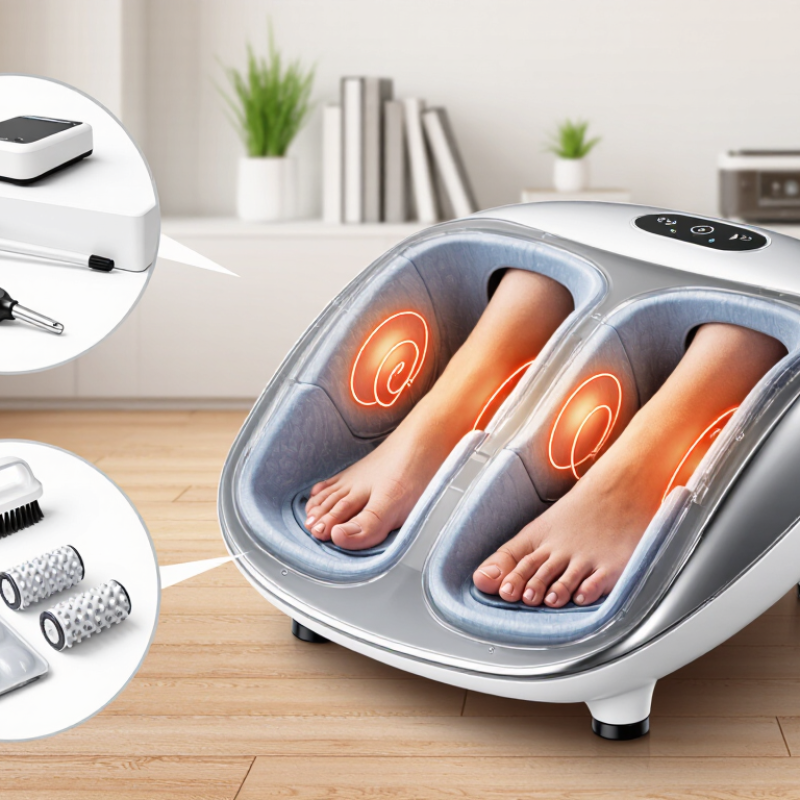
What Is the Best Compact Foot Massager?

What Defines a Compact Foot Massager?

“Compact” has no universal industry size standard for foot massagers. It is better understood as a balance of footprint, weight, and usable interior space. The American Podiatric Medical Association’s 2014 Public Opinion Research on Foot Health and Care found that 77% of surveyed U.S. adults had experienced foot health problems. That self-reported figure is not a clinical diagnosis, but it is a useful reminder: a small device still needs to fit different feet comfortably.

Check the unit’s external dimensions, then look closely at its foot chambers. Your toes should not press against the front, and the sides should not squeeze your feet during use. A compact model may save space under a desk or beside a sofa. But cramped controls or a narrow opening can make it awkward to use. Small matters. A product description that lists dimensions is more helpful than one that simply says “portable.”

Weight and storage matter, too. Consider whether you can lift the massager easily, tuck it into a closet, and wipe its surfaces without fuss. Compare its settings and intensity controls, but do not assume more features mean better comfort. “Compact” is a practical fit question, not a guarantee of performance; sometimes the smallest unit is simply too small.

What Is the Best Compact Foot Massager? - What Defines a Compact Foot Massager?
Dimension or feature Practical compactness guide Why it matters
Floor footprint A useful buying target is about 16 × 12 in (41 × 30 cm) or less. Measure the widest and longest points, including any projecting controls. A smaller footprint is easier to place under a desk or beside a chair. This is a practical guide, not an official industry standard.
Overall height About 9 in (23 cm) or less is a reasonable target when the massager needs to fit beneath furniture. Check the clearance under the specific chair, desk, or sofa; housing shape and feet can affect the required space.
Weight About 10 lb (4.5 kg) or less is a convenient target for occasional room-to-room carrying. Weight affects portability, but a handle or easy-grip sides can also make a unit easier to move.
Foot opening and fit Check the maker’s stated maximum foot length and width. For open-platform designs, compare the usable massage area with your foot size. A compact exterior should still accommodate the intended user. Enclosed designs may have a more limited fit than open platforms.
Design type Open-platform roller models generally leave the feet exposed; enclosed models surround more of each foot and may have a larger housing. The design affects both storage size and the areas of the feet the device can reach. Compare the actual product dimensions rather than relying on the design name alone.
Storage and handling Look for a stable base, manageable cord storage, and a shape that can be stored upright only if the instructions permit it. These details can make a small device more convenient without changing its listed dimensions.
Controls and settings Check that the controls are reachable while seated and that the available intensity or heat settings match your preferences. Compact size does not by itself indicate comfort or suitability. Settings and ease of use are separate selection criteria.
Best-fit definition A compact foot massager combines a modest footprint and height with a weight and foot opening that suit the intended user and storage space. There is no single size definition that applies to every model. Confirm dimensions, fit limits, and required clearance before buying.
Measurement note: Inch-to-centimeter and pound-to-kilogram values are rounded. The size figures above are practical screening targets, not standardized classifications or specifications for a particular product.

How Do Compact Foot Massagers Relieve Foot Tension?

A compact foot massager can ease tension by applying repeated pressure to the soles. Rolling or kneading parts move beneath the arch and heel, stimulating pressure-sensitive tissues and helping tight muscles relax. Some models add gentle vibration or warmth. These features may make tired feet feel more comfortable, though they do not treat the cause of persistent pain. Not magic.

The fit matters. A massager that presses too hard on the arch can feel sharp rather than soothing, especially after a long day in stiff shoes. Start with a low setting and try five minutes while seated. Notice how your feet respond. A pleasant, gradual pressure is usually easier to tolerate than intense kneading. If your toes feel numb or the sensation becomes painful, stop and reposition your feet.

Compact devices have limited space, so their rollers may not reach every part of the foot evenly. That is a real drawback. People with diabetes, reduced sensation, circulation problems, or a recent foot injury should ask a healthcare professional before using one, since pressure and heat may be harder to judge safely. For ordinary tiredness, short sessions can offer a simple way to unwind, but comfort varies from person to person.

What Is the Best Compact Foot Massager?

A good compact foot massager should feel comfortable, offer adjustable intensity, and fit the area you want to massage. Kneading, gentle compression, and vibration can provide sensory stimulation that may help ease the feeling of foot tension.

How to read this chart: The line is a conceptual example of gentle pressure rising and easing during a massage cycle, not measured product data or a clinical result. Start at a comfortable setting and follow the device instructions; stop if you feel pain, numbness, or worsening discomfort.

Which Designs and Features Are Common?

Compact foot massagers often come in two forms: an open platform or a soft-sided foot chamber. Open designs leave the toes free and are usually easier to wipe clean. Enclosed models surround more of the foot, often with fabric liners and a wide opening. Check the usable interior length, not only the unit’s outer dimensions. A compact shell can feel cramped with thick socks. Small detail, big difference.

The mechanisms vary. Rotating nodes or ridged rollers press against the soles, while air cells squeeze the sides and top of each foot. Vibration is common, but it may feel buzzy rather than soothing. Some devices combine these modes. Heat is another frequent feature, though the warmth may be mild. It is not a treatment for an injury or circulation problem. Separate controls for pressure, speed, and heat can make adjustments easier. More settings are not automatically better.

For everyday use, compare the unit’s weight, cord length, control placement, and storage footprint. A removable liner is useful for routine cleaning. Start at the lowest setting, especially if your feet are sensitive. Honestly, product descriptions rarely capture how firm rollers feel against a particular arch. If you have pain, numbness, or swelling, ask a qualified clinician before using a pressure-based device.

How Should Size, Comfort, and Controls Be Compared?

A compact foot massager is only useful if it fits your feet and your room. Check its outer dimensions, then compare them with the space under a desk or beside a chair. Also check the usable foot area: a small housing can still feel cramped around the toes. The American Podiatric Medical Association’s 2014 survey of 1,000 U.S. adults found that 77% had experienced foot problems. That figure is useful context, not proof that a massager relieves pain. Comfort depends on personal fit, pressure, and how long a session feels pleasant.

Tips: Try the device while seated, with both feet placed naturally. Notice whether your heels stay supported and your toes can move. Controls should be easy to reach without bending or searching. Large, clearly labeled buttons are helpful; a remote or simple timer can reduce fiddling. A small trade-off: compact models may be easier to store, but their controls and foot space can feel crowded.

Compare comfort at the gentlest setting before judging stronger modes. Look for adjustable intensity and a surface that does not force your feet into one position. Check whether the unit can be moved without straining, especially if it needs to be stored after each use. A heavy device may stay put, but it is less convenient to lift. That matters. Read the manual for use limits, and stop if pressure causes pain or numbness. No feature list can predict how your feet will respond.

What Factors Help Identify the Best Compact Model?

A compact foot massager should fit your feet, your room, and your routine. Measure the space under your desk or beside your sofa before shopping. Then compare those dimensions with the unit’s actual footprint, not just its product photos. Check its weight, too. A device that is awkward to move may stay unused. The American Podiatric Medical Association reported that 77% of Americans had experienced foot problems in its 2014 public-opinion survey. That figure describes reported problems, not proof that massage treats them.

Look for adjustable intensity and controls you can reach while seated. Gentle, steady pressure may feel more comfortable than a fixed, forceful setting, especially during a first session. Heat is optional, not essential; check whether it can be switched off independently. Review the cleaning instructions and the foot-size range. If your feet press against the sides, the device may feel cramped. Small details matter.

More settings do not automatically mean a better fit. I would test the controls before judging the feature list. A compact model should sit securely on the floor, operate without excessive noise, and be easy to put away. Check the warranty and safety instructions, and avoid using a massager on irritated or injured skin without professional advice. Comfort is personal. Stop if pressure causes pain or numbness, and ask a healthcare professional if you have a condition affecting sensation or circulation.