
Contact Us

Phone
08 8294 8664

Email
sale@awdmedical.com

Address

Top 10 Skin Tone Analyzer Devices for Global Buyers?

Choosing a Skin Tone Analyzer is not just a matter of comparing screens or sensor counts. For global buyers, the right device must deliver repeatable readings across different skin tones, lighting conditions, and working environments. A compact handheld unit may suit a consultation room, while a camera-based system may fit a high-volume retail counter. Small differences matter. A useful principle drawn from color scientist Dr. Roy S. Berns’s work is: “Reliable color measurement depends on controlled, repeatable conditions.” This is a summary, not a verbatim quotation.

This guide compares ten devices through practical buyer questions: What does each measure? How easy is calibration? Can staff use it consistently under bright store lighting? Buyers should also examine software compatibility, language options, training, technical support, and clear documentation. A device that produces a polished color chart but offers little guidance on measurement conditions may create misplaced confidence. No device is perfect.

Specifications alone rarely tell the whole story. Ask vendors how readings were validated, which skin tones were included, and whether results remain consistent across repeated scans. Check data-handling practices and confirm that the device is intended for cosmetic or product-matching use, not medical diagnosis. Some details may be hard to compare because manufacturers use different methods and terminology. That is worth acknowledging. The following list gives global buyers a grounded starting point, not a universal ranking; the best choice depends on the user, workflow, and evidence available.
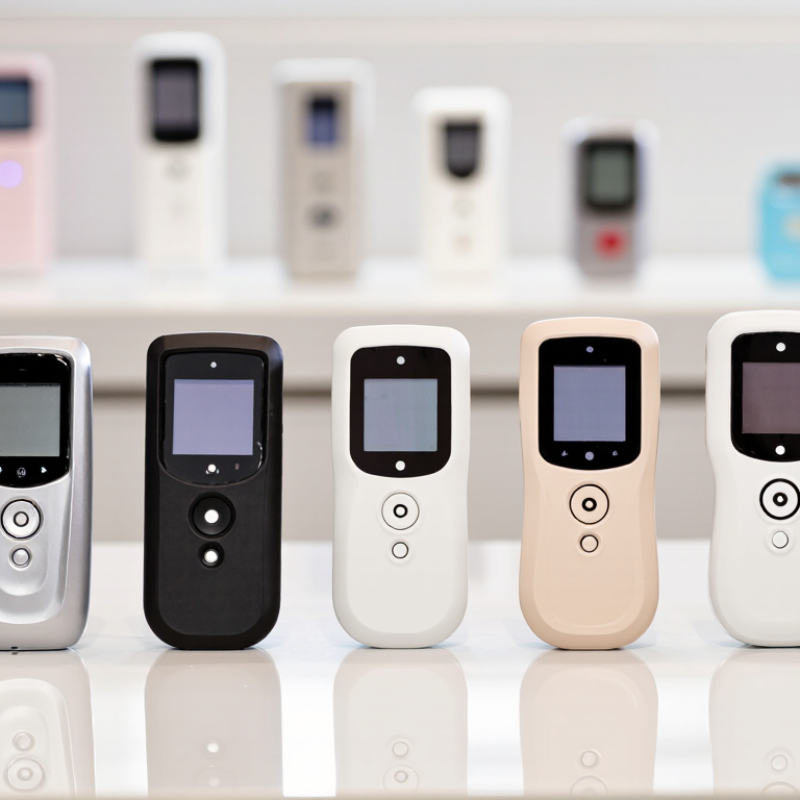
Top 10 Skin Tone Analyzer Devices for Global Buyers?

What Skin Tone Analyzer Devices Measure and How They Work

Skin tone analyzers estimate visible skin color by measuring light reflected from the skin. Many use a sensor and built-in illumination to reduce changes caused by room lighting. Software may convert the reading into color coordinates, such as lightness and red-green or yellow-blue values. Some devices also estimate melanin or redness indices. These are measurements, not medical diagnoses.

A device may touch the skin or scan it from a short distance. Contact models can be sensitive to pressure and placement; non-contact models need steady positioning. Results are most useful when readings come from the same skin area under similar conditions. Makeup, recent sun exposure, dryness, and even a warm room can shift a reading. A number is not the whole story. Skin tone categories also vary across systems, so comparisons between devices may be imperfect.

Tips: Clean and dry the test area, then follow the device’s distance and positioning instructions. Take several readings at the same site and compare their consistency. Record the lighting and skin location, too. If values differ, check technique before assuming the skin has changed.

Skin Tone Analyzer Devices: What They Measure and How They Work

Many analyzers capture reflected light to estimate skin color. Colorimetric systems can use CIE L* (lightness) and b* (yellow–blue) values to calculate the Individual Typology Angle (ITA°). The chart shows boundaries used in one commonly cited ITA classification; analyzer methods and category cutoffs can vary, so these values are not a ranking of devices.

Key Factors for Evaluating Devices Across Global Markets

Global buyers should test a skin tone analyzer under real conditions, not just a showroom lamp. Check its measurement range, repeatability, calibration method, and performance across varied skin tones. Ask for raw validation results, including sample sizes and lighting conditions. A single accuracy percentage can hide uneven performance.

NIST’s 2019 Face Recognition Vendor Test, NISTIR 8280, found that many algorithms had demographic differences in false-positive rates, sometimes by factors of 10 or more. This was facial recognition research, not a skin analyzer test. Still, it shows why vendors should document subgroup testing rather than rely on one pooled score. A neat score can still be wrong. Buyers should compare repeated readings on the same person, under controlled lighting, and after ordinary device handling.

Markets add practical friction. Confirm local service access, replacement-part availability, language support, and clear data-retention settings. Ask whether the device uses a physical reference target and how often calibration is checked. ISO/CIE 11664-4:2019 defines the CIELAB color space, but using a recognized color system alone does not prove clinical accuracy. Request the test protocol and independent evidence. Also check whether performance changes with warm indoor light, sunlight, or a slightly shifted sensor distance. Small details matter. Some documentation may still leave gaps; buyers should record them before procurement, not after deployment.

Ten Skin Tone Analyzer Devices: Features and Intended Uses

A handheld colorimeter offers quick readings from a small area, useful for checking makeup shades or tracking visible changes under consistent conditions. A benchtop spectrophotometer measures reflected light across many wavelengths, making it better suited to research and product development. A smartphone attachment provides convenient, lower-cost comparisons, though room lighting can distort results. An RGB imaging camera captures broad color patterns across the face and can support cosmetic consultations. A multispectral imaging system records several wavelength bands, helping trained operators examine surface color variation in greater detail. More data is not always better.

A cross-polarized facial imager reduces glare and helps reveal uneven redness or pigmentation patterns; it does not diagnose disease. A contact probe measures a small skin area and suits repeat assessments when placement stays consistent. A portable reflectance meter is useful for field studies, but calibration matters. A full-face scanning booth captures standardized images for before-and-after comparisons. A clinic skin-analysis platform may combine imaging, measurements, and reporting for consultations or research workflows. Buyers should check repeatability, calibration procedures, supported skin-tone ranges, and privacy controls. Even careful measurements have limits: hydration, recent sun exposure, and camera angle can shift readings. Skin tone is complex, not a single number.

Comparing Accuracy, Calibration, and Compatibility

Accuracy is not a single number on a product sheet. A useful skin tone analyzer should give repeatable readings across several areas, not just one cheek. Check whether measurements change under different room lighting, and whether the device uses controlled illumination. Small shifts matter when readings guide shade matching or track changes over time. Ask how accuracy was tested, and whether results were compared with a documented reference method. A precise-looking decimal is not proof of reliable measurement.

Calibration deserves equal attention. Some devices need a reference tile or routine sensor check; others adjust automatically. Read the maintenance instructions before buying, especially if the device will travel between clinics or retail counters. Calibration can drift. A simple daily check may prevent avoidable variation, but it also takes staff time. That trade-off is easy to overlook. I would avoid trusting a device that offers no clear calibration guidance.

Compatibility affects whether measurements are useful beyond the device itself. Confirm that readings can be exported in a common file format and linked to the software your team already uses. Check operating-system support, language options, and whether offline use is possible. For global buyers, test the device with local lighting conditions and a range of skin tones before ordering in volume. One weakness in any shortlisting process is relying on demonstrations alone; real workflows can be messier. Ask for a trial, record repeat readings, and compare them under consistent conditions.

Top 10 Skin Tone Analyzer Devices for Global Buyers? — Comparing Accuracy, Calibration, and Compatibility
Rank Device Type What It Measures Accuracy Considerations Calibration Needs Compatibility Best Suited For
1 Reflectance spectrophotometer Reflected light across multiple wavelengths; commonly reports color coordinates. Generally suited to repeatable color measurement when the instrument, contact, and measurement protocol are controlled. Not a direct measure of every biological property of skin. Use the supplied white or reference standard as specified by the manufacturer; maintain consistent site and contact conditions. Typically exports readings to computer software; file formats and integrations vary by model. Standardized color assessment, research, and product development.
2 Multi-wavelength reflectance spectrometer Skin reflectance at selected wavelengths; some systems estimate melanin- or erythema-related indices. Useful for consistent within-protocol comparisons. Results depend on wavelength selection, probe placement, and the model used to derive indices. Follow reference-tile or built-in calibration procedures; check calibration at the frequency specified for the instrument. Often connects by USB or wireless link to dedicated software; confirm operating-system and export support. Clinical or research measurements requiring wavelength-specific data.
3 Tristimulus colorimeter Color approximated through three broad measurement channels, commonly expressed as color coordinates. Practical for color comparisons, but its broad channels do not capture the full reflectance spectrum. Results may differ from those of a spectrophotometer. Requires instrument-specific calibration, often against a supplied reference standard. Usually supports a manufacturer’s software or data output; verify export formats before purchase. Routine color checks and workflows where portability and simplicity matter.
4 Contact melanin-index meter Optical readings used to calculate a melanin-related index at the probe site. Provides an index rather than a universal skin-tone category. Values are most meaningful under the same device, site, and measurement protocol. Check the device’s reference procedure and keep probe pressure and placement consistent. May store readings onboard or transfer them to dedicated software; check data-transfer options. Repeated measurements in clinical studies or controlled assessments.
5 Multispectral skin-imaging system Images captured under multiple illumination bands; software may map color or selected skin-related features. Can assess a wider area than a contact probe, but results depend on illumination, camera response, image processing, and positioning. Requires controlled lighting and the system’s calibration workflow; consistent camera distance and positioning are important. Usually works with dedicated imaging software; confirm camera, workstation, and export compatibility. Clinics and research teams needing spatial maps or documented images.
6 Standardized clinical photography booth Photographic appearance under controlled illumination, sometimes with cross-polarized imaging. Improves image consistency compared with uncontrolled photography, but images remain sensitive to camera settings, lighting, and processing. Use fixed lighting and camera settings; a color reference target can help check image consistency. Compatible with camera-based workflows; confirm image formats and analysis-software requirements. Before-and-after documentation and visual assessment in a controlled setting.
7 Smartphone camera with color-reference card Camera-based color estimates adjusted using a photographed reference card. More controlled than an unreferenced phone image, but phone cameras, automatic processing, display settings, and ambient light can still affect results. Capture the reference card in the same lighting and frame; lock camera settings where possible. Broad smartphone availability; app support and file handling vary across devices and operating systems. Field documentation or preliminary screening where laboratory-grade measurement is not required.
8 Smartphone skin-analysis application Image-derived estimates, typically based on the phone camera and software algorithms. Performance is application- and device-dependent. Treat outputs as estimates unless the method has been independently validated for the intended use. Follow the app’s lighting and positioning instructions; some workflows use a reference card or guided capture. Depends on supported phone models, operating systems, and app availability by region. Consumer-facing guidance and preliminary assessments.
9 Calibrated dermatoscope with imaging Magnified skin images; some setups add controlled illumination or color-reference procedures. Useful for visual examination and documentation, but a dermatoscope alone is not a standardized quantitative skin-tone meter. Maintain consistent illumination and image settings; use a reference target when color comparison is important. May connect to a phone, camera, or computer; verify adapters, software, and image-export support. Dermatology workflows combining close-up examination with image records.
10 Portable camera-based colorimeter Surface color estimated from a compact optical sensor or camera-based measurement. Convenient for screening and comparisons, but accuracy depends on illumination control, sensor design, and validation of the measurement method. Use the supplied reference procedure and keep the measurement angle and distance consistent. Check whether readings export to a phone, computer, or cloud platform and whether offline use is supported. Mobile teams and buyers prioritizing portability.

Comparison note: These are device categories, not brand-specific product specifications. There is no single accuracy ranking that applies across all models and skin-measurement tasks. Before buying, review independent validation for the intended population and use, the measurement protocol, calibration support, data-export options, and local service availability.

Matching a Device to Clinical, Retail, or Research Needs

Clinical teams need repeatable measurements, not a flattering screen. Choose a device with controlled lighting, calibration checks, and exportable readings for follow-up visits. Ask whether it reports melanin and erythema indices, or only a composite score. That difference matters. A number without measurement conditions can mislead. Check performance across age groups, body sites, and a range of skin tones before relying on results.

Retail settings often need quick readings, easy cleaning, and simple staff training. A handheld sensor may suit a busy counter better than a large imaging station. Still, one cheek reading can miss variation across the face. Research teams should prioritize raw data access, stable illumination, and documented repeatability. The CIE L*a*b* system separates lightness from red-green and yellow-blue coordinates, offering more detail than a single tone label.

Validation deserves extra scrutiny. NIST’s 2019 Face Recognition Vendor Test evaluated 189 algorithms and found demographic differences in false-positive rates, reaching 100-fold in some comparisons. That was not a test of skin analyzers, but it illustrates why performance claims need population-specific evidence. Request validation data for the intended use and users. A polished dashboard is not proof. And no device reading, by itself, is a diagnosis.