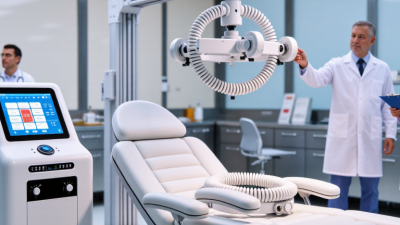
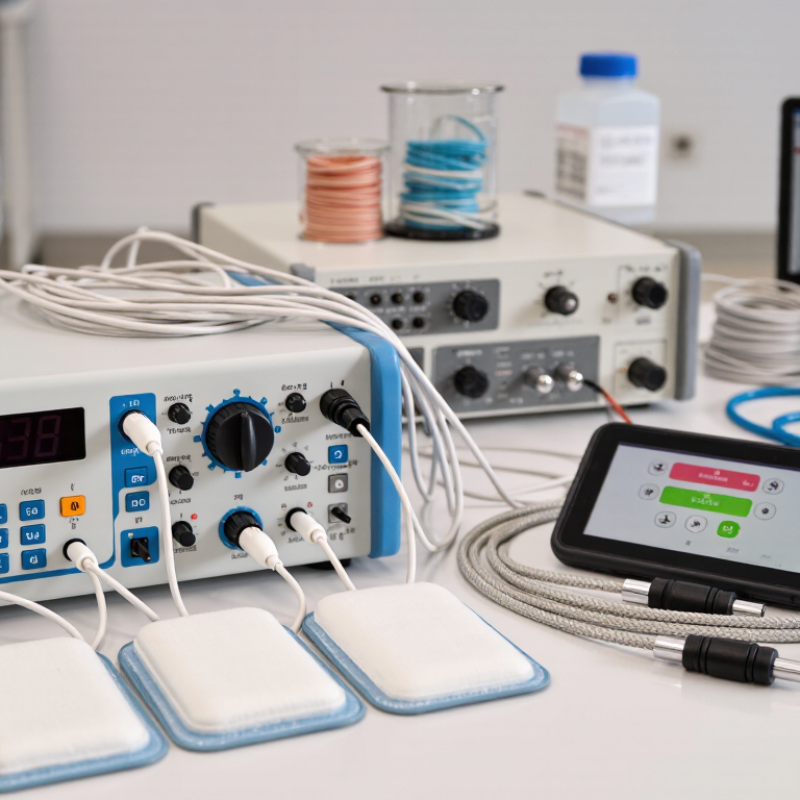
What Are the Top China Transcranial Stimulation Devices? This question deserves more than a factory list or a polished product photograph. China offers a broad range of Transcranial Stimulation systems, including tDCS, tACS, and combined neurostimulation platforms. Their designs may differ in current control, electrode materials, software, portability, and clinical documentation. Some devices fit beside a hospital bed. Others resemble compact laboratory instruments, with cables, saline-soaked pads, and touchscreen settings.
Michael A. Nitsche, a leading researcher in transcranial direct current stimulation, has stated, “The effects of tDCS depend on many factors, including stimulation parameters and the state of the brain.” That warning matters. A higher current does not automatically mean a better device. Buyers should examine waveform accuracy, impedance monitoring, emergency shut-off functions, electrode consistency, user training, and published human studies. Regulatory status and quality-management records also deserve careful review.
A useful comparison must separate clinical evidence from marketing language. It should consider the intended users, target conditions, stimulation duration, and after-sales support. Hospital-grade equipment may prioritize documentation and repeatability. Research models may offer more flexible protocols but require trained supervision. Home-use products need extra caution. Convenience can hide limitations.
No simple winner exists. That is the uncomfortable part. A device with excellent hardware may lack strong clinical evidence, while a modest-looking system may provide better documentation. This guide evaluates leading China-based options through safety, technical performance, usability, evidence quality, and professional credibility. Readers should still consult qualified clinicians before using any Transcranial Stimulation device.
China’s transcranial stimulation market expanded in 2024, supported by hospital research, rehabilitation services, and growing interest in home-based care. The strongest demand appeared in devices with clear treatment protocols, measurable outcomes, and trained clinical support. Market growth is real, but reporting remains uneven across provinces.
Top devices should be compared by category, not appearance.
Transcranial direct current stimulation uses mild electrical current through scalp electrodes.
Transcranial alternating current stimulation targets rhythmic brain activity and remains more research-focused.
Repetitive transcranial magnetic stimulation uses magnetic pulses and is commonly found in specialist hospitals.
Portable systems are smaller, simpler, and designed for supervised home programs.
Evidence matters.
Clinical teams usually examine stimulation accuracy, session tracking, electrode safety, software controls, and post-market support. A device with attractive specifications may still lack strong local data. That is an important weakness. Hospitals also consider registration status, operator training, maintenance access, and compatibility with rehabilitation workflows. For buyers in 2024, the most credible choices were not always the newest models. They were devices supported by transparent testing, published clinical evidence, and realistic instructions. The market is promising, but users should question exaggerated claims and separate experimental applications from established care.
The strongest device is not always the most powerful one. It should match the treatment target, evidence, and clinical workflow. In China, professional systems commonly support transcranial direct current stimulation, transcranial magnetic stimulation, or transcranial alternating current stimulation. Each method uses different physical parameters and reaches different therapeutic goals.
tDCS sends a weak, steady current between two electrodes placed on the scalp. Clinicians adjust current intensity, session length, electrode size, and polarity. It may support motor recovery, mood-related care, or pain management under qualified supervision.
TMS uses a coil to deliver magnetic pulses. Frequency, pulse intensity, coil position, and train duration shape its effect. High-frequency protocols often target activity enhancement, while low-frequency protocols may reduce activity in selected cortical areas. The exact response varies between patients.
tACS applies a rhythmic current, usually described by its frequency, amplitude, phase, and electrode arrangement. Researchers study it for attention, memory, motor control, and brain-network coordination. The theory sounds precise, but real clinical outcomes remain uneven.
A useful device should record treatment parameters, provide stable output, and include clear safety controls. Trained operators also matter. A technically advanced system can still produce poor care if positioning is careless.
I would compare clinical validation, electrical accuracy, patient monitoring, and after-sales training before calling any device “top.” The boundary between promising research and routine treatment is not always neat.
China-made transcranial stimulation devices vary widely in output, frequency, intensity, and certification. A strong comparison begins with the stimulation method, not the appearance of the control panel.
For tDCS devices, evaluators should check adjustable current, electrode size, ramping control, and impedance monitoring. Many systems operate within low direct-current ranges, but the exact specification must match the product’s technical file. tACS equipment requires closer attention to frequency accuracy and waveform stability. TMS systems need documented pulse intensity, repetition rate, coil design, and cooling performance. Small differences can affect comfort and repeatability.
Output data should be stated clearly in milliamps, volts, hertz, or maximum stimulator output. Vague terms such as “high power” offer little professional value. Certification also needs careful review. In China, relevant medical products may require NMPA registration, while manufacturing quality is often supported by ISO 13485 systems. Electrical safety evidence may reference IEC 60601 standards. CE marking can support access to certain markets, but it does not automatically prove clinical effectiveness.
A practical check includes the exact model number, intended use, test reports, user instructions, and post-market support. Certification can cover one version, not every configuration. That detail is easy to miss. Published clinical evidence should also match the device’s waveform, intensity, and treatment protocol. A device may show impressive output figures yet provide weak documentation. Independent verification remains valuable, especially when specifications appear unusually broad.
| Device Category | Stimulation Output | Frequency | Intensity / Amplitude | Typical Electrode or Coil Configuration | Certification and Compliance Considerations |
|---|---|---|---|---|---|
| Repetitive Transcranial Magnetic Stimulation (rTMS) | Short magnetic pulses generated by a stimulation coil; output is normally specified as magnetic field strength or as a percentage of the device's maximum stimulator output. | Approximately 0.1–20 Hz for conventional rTMS; patterned protocols may use burst frequencies within the protocol design. | Common clinical settings are about 80–120% of the individual motor threshold. Exact magnetic field strength depends on coil design and device model. | Figure-of-eight, circular, or specialized coils; treatment intensity is normally calibrated using motor-threshold testing. | Medical-use models may require registration with China's National Medical Products Administration (NMPA). IEC 60601-1 and applicable electromagnetic-compatibility requirements are commonly relevant; the exact certificate must be checked for the specific model and intended use. |
| Transcranial Direct Current Stimulation (tDCS) | Constant low-intensity direct current delivered through the scalp. | 0 Hz or non-oscillating direct current. | Common device ranges are 0–2 mA or 0–5 mA, with current density depending on electrode size. Ramp-up and ramp-down controls are typically included. | Usually two saline-soaked or conductive-rubber electrodes, often approximately 25–35 cm² each, although sizes vary. | Certification depends on whether the product is intended for medical treatment, research, or wellness use. Medical models may require NMPA registration and electrical-safety testing; research-only status should not be treated as clinical approval. |
| Transcranial Alternating Current Stimulation (tACS) | Sinusoidal or waveform-controlled alternating current. | Commonly 0.1–100 Hz; some research-oriented systems support frequencies above this range. | Typically up to approximately 2 mA peak-to-peak or a comparable low-current specification, depending on the manufacturer’s measurement convention. | Two or more electrodes, with conductive gel, saline, or sponge interfaces; montage and electrode area affect delivered current density. | The specific product certificate is essential because research stimulators and medical devices follow different regulatory pathways. Relevant testing may include IEC 60601-1, IEC 60601-1-2, and biocompatibility evaluation for patient-contacting materials. |
| Transcranial Random Noise Stimulation (tRNS) | Randomized, broadband, low-amplitude alternating current. | Often configured from approximately 100–640 Hz, although the available noise band differs between systems. | Usually specified as a low-current peak or root-mean-square amplitude, commonly within approximately 0–2 mA depending on the protocol. | Typically uses two or more surface electrodes with programmable noise bandwidth and amplitude. | Many tRNS systems are marketed for research rather than as approved therapeutic equipment. NMPA status, intended-use labeling, electrical safety, EMC, and patient-contact material documentation should be verified separately. |
| Transcranial Pulsed Current Stimulation (tPCS) | Pulsed direct-current waveforms, such as monophasic or biphasic rectangular pulses. | Commonly programmable from sub-hertz values to several hundred hertz, depending on pulse width and protocol. | Often within a low-current range of approximately 0–2 mA; pulse width, duty cycle, and charge per phase are important safety parameters. | Usually two surface electrodes; some systems support multi-channel stimulation and programmable polarity. | Regulatory classification varies by claims and intended use. A valid medical-device registration, risk-management file, electrical-safety report, and user instructions should be confirmed for any clinical application. |
| Multichannel Transcranial Electrical Stimulation | Independently controlled direct, alternating, or mixed-current outputs delivered through multiple channels. | Typically supports direct current and programmable frequencies from approximately 0.1–100 Hz; research systems may offer wider ranges. | Commonly 0–2 mA per channel, with total current, current density, impedance limits, and electrode offsets controlled by software. | Four, eight, or more electrodes; high-definition configurations may use small central electrodes surrounded by return electrodes. | Often intended for neuroscience research. For clinical use, verify NMPA registration, channel-specific safety controls, IEC 60601 compliance where applicable, EMC testing, and documentation for all patient-contacting accessories. |
| Low-Intensity Focused Ultrasound Neuromodulation (LIFU) | Focused acoustic energy delivered through an ultrasound transducer rather than electrical current. | Pulse-repetition frequency is commonly in the tens to hundreds of hertz, while the acoustic carrier frequency is generally in the hundreds of kilohertz range. | Output is specified using acoustic intensity, pressure, duty cycle, pulse duration, and sometimes mechanical-index-related parameters; values are highly device-specific. | Single-element or phased-array transducers with coupling gel and positioning or targeting accessories. | Clinical certification is indication-specific and should not be inferred from laboratory or research use. Ultrasound output testing, acoustic safety documentation, EMC, electrical safety, and NMPA authorization should be verified for the exact system. |
Note: The specifications above represent commonly reported ranges for device categories manufactured or supplied in China, not the specifications of a particular brand or model. Actual output, frequency limits, intensity definitions, and certification status vary by product, intended use, and regulatory classification. Always confirm the product label, technical file, user manual, and applicable NMPA registration or filing before clinical or commercial use.
When evaluating top China transcranial stimulation devices, safety should come before rankings. IEC 60601-1 addresses basic safety and essential performance for medical electrical equipment. Relevant collateral standards may cover electromagnetic compatibility, usability, and particular stimulation functions. However, a certificate is not proof of clinical effectiveness. Buyers should verify the exact device model, test scope, issuing laboratory, and current documentation.
Practical assessment also requires careful adverse-event monitoring. Users may report temporary tingling, skin redness, headache, dizziness, fatigue, or discomfort during stimulation. Stronger sensations are not necessarily better. Operators should record intensity, session length, electrode placement, and symptoms after each session. Poor contact can create hot spots, like a small burning patch under an electrode. In real settings, rushed training remains an overlooked risk.
Contraindications require professional screening, not a checkbox. Extra caution is needed for implanted electronic devices, metal implants near the head, seizure history, significant neurological conditions, pregnancy, or unexplained headaches. Restrictions vary by stimulation method and patient status. The instructions may appear clear, yet clinical judgment is still essential. I would also question vague claims such as “zero risk” or “suitable for everyone.” They sound reassuring, but they weaken credibility. A reliable evaluation combines IEC evidence, transparent incident reporting, qualified supervision, and traceable maintenance records.
What Are the Top China Transcranial Stimulation Devices?
Clinical quality matters more than a polished product page. In China, transcranial stimulation devices may include repetitive transcranial magnetic stimulation, transcranial direct current stimulation, or related electrical systems. Their clinical value depends on the indication, stimulation target, dosage, and treatment schedule. A device showing promising depression results may not suit stroke rehabilitation or pain management.
Look for randomized, sham-controlled trials with clear participant numbers and follow-up periods. Check whether outcomes use validated scales, such as depression scores or motor-function tests. Trial registration in public databases can improve transparency, but registration alone does not prove effectiveness. Small studies may report impressive changes, then lose strength when larger trials examine the same protocol. Evidence remains uneven.
Regulatory status requires careful checking. A Chinese device should have traceable registration or approval information from the National Medical Products Administration when marketed for a specific medical use. Approval scope matters. Research authorization is not the same as commercial clinical approval. Also review electrical safety, magnetic-field limits, operator training, maintenance records, and adverse-event reporting. During evaluation, I would request the full protocol, not only selected results. That step is often overlooked. I would also compare real-world treatment time, electrode placement, coil positioning, and patient tolerance. My judgment may still change as longer follow-up data appear.
The chart shows representative intervention time per session commonly reported in clinical trials and treatment protocols. Session duration alone does not establish efficacy; selection should also consider indication-specific randomized evidence, technical specifications, safety monitoring, and current NMPA registration for the intended use.
| Modality | Typical Clinical-Trial Pattern | Evidence Consideration | Regulatory Check |
|---|---|---|---|
| tDCS | Usually 1–2 mA for 20–30 minutes, repeated across multiple sessions | Indication-specific results; protocol and montage strongly affect outcomes | Verify NMPA registration, intended indication, and electrode configuration |
| tACS | Commonly 20–30 minutes with frequency-selected stimulation | Clinical evidence remains more indication- and protocol-dependent | Confirm whether the device is registered for clinical use or research only |
| rTMS | Often approximately 20–30 minutes per session in multi-session courses | More established clinical evidence for selected indications and protocols | Check registered indication, coil type, stimulation parameters, and safety documentation |
| iTBS | Approximately 3 minutes per standard 600-pulse session | Evidence supports use in selected clinical applications, but implementation must follow validated protocols | Confirm that the registered device and software specifically support the protocol |
Data note: Values are representative protocol parameters reported in clinical research and standard treatment descriptions, not performance claims for any specific company or brand. Regulatory status may change and should be checked against the current official NMPA database.