Contact Us

Phone
08 8294 8664

Email
sale@awdmedical.com

Address

China Top 10 Home TMS Machine Manufacturers

Interest in neuromodulation is growing, but a device’s setting matters. The World Health Organization’s 2022 World Mental Health Report estimates that about 280 million people worldwide live with depression. This figure signals a substantial treatment need; it does not prove that every magnetic stimulation product is suitable for home use. Clinical transcranial magnetic stimulation (TMS) generally involves trained oversight, careful patient selection, and defined treatment protocols. A product page is not clinical evidence.

This guide to China’s top 10 home TMS machine manufacturers offers a starting point for evaluating suppliers, not a clinical endorsement. It focuses on verifiable details: intended use, published technical specifications, quality documentation, user training, after-sales support, and clarity about who should operate each device. FDA materials describe cleared TMS systems for specific uses, but clearance for one system or indication should not be assumed to cover another product or home setting. That distinction is easy to blur.

A careful comparison should also ask whether manufacturers provide accessible manuals, realistic service commitments, and evidence supporting their claims. Home Tms Machine is a broad search term, not a guarantee of safety, effectiveness, or regulatory status. Some public information may be incomplete. Buyers and clinicians should verify claims directly and consult qualified professionals before considering treatment. The market deserves scrutiny, not hype.
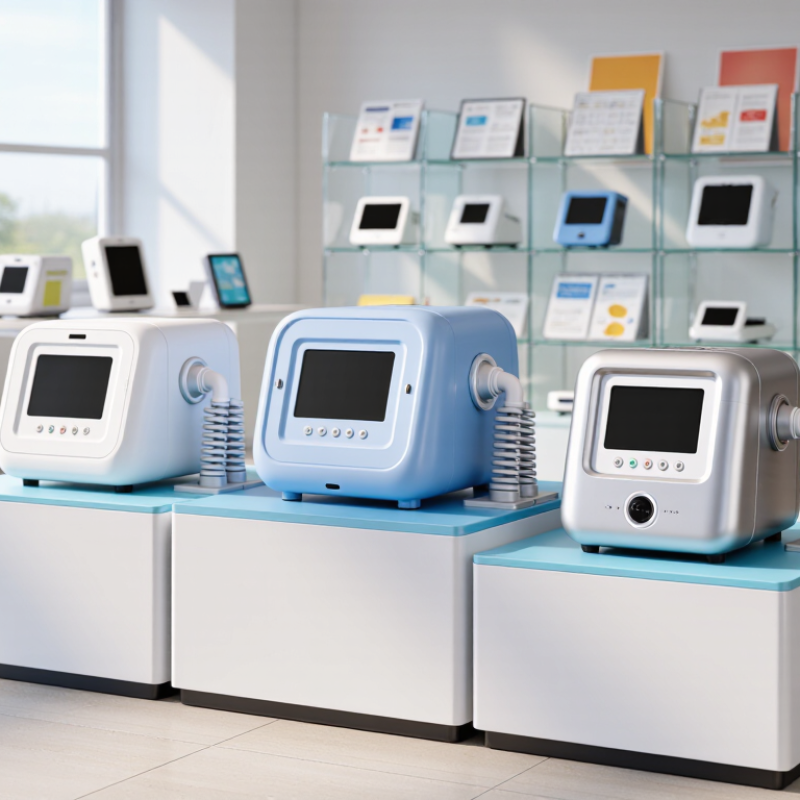
China Top 10 Home TMS Machine Manufacturers

What Home TMS Machines Are and How They Work

Home transcranial magnetic stimulation (TMS) machines use a coil to create brief magnetic pulses near the scalp. These pulses induce small electrical currents in targeted brain tissue and can influence patterns of neural activity. The person usually sits still while the coil rests against a marked area of the head. Some sessions may involve a tapping sensation or clicking sounds.

The term “home TMS” can describe different devices and care arrangements. That distinction matters. Evidence and safety information may vary, and equipment intended for clinical treatment is not automatically suitable for unsupervised use. A qualified clinician should assess whether TMS is appropriate, explain the treatment plan, and review relevant medical history. Users should follow the device instructions and seek professional guidance about unexpected symptoms.

Home delivery may make repeated sessions easier to fit into daily life, but it does not remove the need for careful setup and follow-up. Coil placement, pulse settings, and session timing can affect treatment. Small details matter. A device’s appearance alone cannot show whether it is effective or appropriate for a particular person. TMS is not a guaranteed solution, and expectations should be discussed with a healthcare professional.

How China’s Home TMS Manufacturing Sector Is Structured

China’s home TMS manufacturing sector is better understood as a supply chain than a list of finished-device factories. It typically combines magnetic-coil production, power electronics, control software, enclosure assembly, and clinical or engineering testing. Some manufacturers handle several stages; others rely on specialist suppliers. That difference affects traceability, repair access, and how consistently a device performs at home.

Demand context should not be mistaken for proof of home-device demand. The World Health Organization’s World Mental Health Report (2022) estimated that nearly one in eight people worldwide lived with a mental disorder in 2019. This is a broad mental-health indicator, not a TMS sales forecast. In China, the National Medical Products Administration’s public registration records can help verify a product’s stated registration status, but registration alone does not establish suitability for unsupervised home use. Buyers should examine intended-use instructions, safety testing, service support, and whether treatment settings are clinician-managed. Look closely at the coil housing and cable strain relief. Small parts matter.

The sector’s structure is still uneven. A factory may have strong electronics expertise but limited experience designing for repeated home use. That gap deserves more attention. Manufacturers and purchasers should ask who validates software changes, checks output consistency, and supports users after delivery. These details are less visible than product specifications, yet they shape reliability.

China’s Home TMS Manufacturing Sector: Technical Design Context

Representative pulse rates used in established TMS protocol types—not manufacturer, sales, or market-share data.

TMS products must generate controlled magnetic pulses and support the timing requirements of different protocols. For manufacturers, this makes pulse generation, coil design, positioning, and safety controls key engineering considerations. The plotted values are representative protocol rates, not treatment recommendations; actual protocols vary.

Criteria for Selecting China’s Top 10 Home TMS Machine Manufacturers

Selecting China’s top 10 home TMS machine manufacturers requires more than comparing prices or feature lists. Start with the device’s intended use, technical documentation, and evidence supporting its stated performance. Ask whether output settings are clearly specified and whether quality checks are documented for each unit. Small details matter. For example, controls should be easy to read, and instructions should explain setup, cleaning, and routine maintenance without vague wording.

Safety and support deserve equal attention. Check how manufacturers address clinician oversight, user training, device servicing, and questions about potential side effects. Reliable suppliers should provide traceable test records and explain how they handle faults, repairs, and replacement parts. Do not treat polished marketing claims as clinical evidence. Ask for documents that can be independently reviewed, and compare answers across suppliers. A weighted score may help organize comparisons, but it can imply more certainty than the available evidence supports. Criteria should be adjusted to the intended users, care setting, and level of professional supervision. Some points will remain difficult to verify from a brochure alone.

China Top 10 Home TMS Machine Manufacturers - Criteria for Selecting China’s Top 10 Home TMS Machine Manufacturers

Evaluation framework: The criteria below provide a suggested 100-point comparison method, not a verified manufacturer ranking. Confirm that any device is intended and authorized for its proposed use; home TMS should be considered only under appropriate clinician guidance.

No. Selection criterion Suggested weight Evidence to check Scoring guidance
1 Regulatory status and intended use 18 points Check applicable Chinese medical-device registration or filing information, the approved intended use, device model, manufacturer details, and current labeling. Confirm that claims about home use match the documentation. Score higher when records are current, independently verifiable, and consistent with the device and its stated use. Do not treat export certificates as a substitute for applicable Chinese authorization.
2 Safety controls and risk management 18 points Review documented contraindications, screening instructions, emergency procedures, operator guidance, and safeguards against unintended operation. Ask how users are directed to seek medical advice. Score higher for clear, device-specific safety information and practical safeguards. A brochure alone is not sufficient evidence of clinical suitability for home use.
3 Clinical evidence and claim support 14 points Request published studies or other clinical evidence relevant to the device, treatment protocol, target population, and claimed outcomes. Check study methods and whether the evidence applies to the proposed setting. Score higher when claims are supported by relevant, transparent evidence rather than testimonials or unsupported promotional statements.
4 Home-use suitability and supervision 12 points Verify who selects and adjusts treatment settings, whether clinician assessment or follow-up is required, and what training, monitoring, and support are provided to the user. Score higher for a clearly documented care pathway with appropriate professional oversight and realistic home-use instructions.
5 Output and treatment-parameter control 10 points Review the technical specifications and user documentation for adjustable parameters, treatment-session controls, error handling, and measures that prevent settings from being changed inappropriately. Score higher when specifications are clearly stated, controls are understandable, and treatment parameters are managed according to the prescribed protocol.
6 Ease of use and accessibility 8 points Assess setup steps, instructions, display readability, control layout, user training materials, and whether the intended user can operate the device as described. Score higher for clear instructions and a practical setup process, while retaining appropriate safety checks.
7 Quality-system and manufacturing transparency 7 points Ask for verifiable information about the manufacturing site, quality-management practices, product traceability, complaint handling, and change control. Check that documentation refers to the offered model. Score higher when quality and traceability documentation is specific, current, and consistent across the product materials.
8 Training and after-sales support 5 points Confirm available user training, technical support channels, service hours, response procedures, and access to replacement parts or qualified service. Score higher for documented support arrangements that are practical in the buyer’s location and language.
9 Maintenance and device lifecycle 4 points Check maintenance instructions, inspection intervals if specified, expected service life, warranty terms, software or firmware update procedures, and end-of-life support. Score higher when maintenance requirements and lifecycle costs are clearly explained and service arrangements are available.
10 Total cost and contract clarity 4 points Compare the quoted device price with shipping, training, accessories, maintenance, warranty exclusions, service fees, and other recurring costs. Review contract and return terms. Score higher for transparent, itemized pricing and clearly stated warranty and service conditions; do not rank by purchase price alone.
Total suggested weighting 100 points Apply the same evidence requirements and scoring method to every candidate.

Profiles of Ten Leading Chinese Home TMS Machine Manufacturers

A practical guide to ten Chinese home TMS machine manufacturers should help readers compare more than product photos. Each profile can examine the intended user, treatment settings, coil design, device dimensions, and available technical documentation. Look for clear explanations of how stimulation levels are adjusted and what training users need. A control screen may look simple, but safe operation depends on more than a few buttons.

Reliable profiles should distinguish verified information from promotional claims. Check whether a manufacturer provides traceable quality procedures, product testing details, user manuals, and responsive after-sales support. Ask how the device is maintained and where users can obtain qualified clinical guidance. Home use is not suitable for everyone, and a machine’s advertised features do not establish that treatment is appropriate. Some company information may be difficult to compare; that limitation deserves attention, not guesswork.

Tips: Compare written specifications side by side. Confirm intended use, service arrangements, and applicable local authorization with qualified professionals. Keep records of questions and answers. Be cautious when evidence is vague.

How to Compare Manufacturers by Safety, Certification, and Support

WHO’s World Mental Health Report (2022) estimated that 970 million people lived with a mental disorder in 2019. Its 2023 depression fact sheet estimated 280 million people experienced depression. These figures show the scale of need, not proof that home TMS suits every person. Compare manufacturers by asking who screens users, sets treatment limits, and responds to side effects. Ask to see clear instructions for coil placement, session duration, emergency shutoff, and cleaning. Small details matter. A confusing screen can undermine careful training.

Check certificates against the exact model and manufacturing site. IEC 60601-1 addresses electrical safety; IEC 60601-1-2 covers electromagnetic compatibility, while ISO 13485 concerns quality management systems. Certification is not clinical proof. Request test reports, registration documents for the markets served, and evidence supporting the intended home use. A certificate can look convincing yet cover another model. That gap deserves scrutiny. Support matters after delivery: ask about user training, software updates, replacement coils, repair turnaround, and escalation for adverse events. Get response times in writing. Compare actual service records where available, not just promises. I would also ask how complaints are logged; many buyers may overlook this practical question.