Contact Us

Phone
08 8294 8664

Email
sale@awdmedical.com

Address

10 Tips for Choosing To Go Containers for Global Buyers

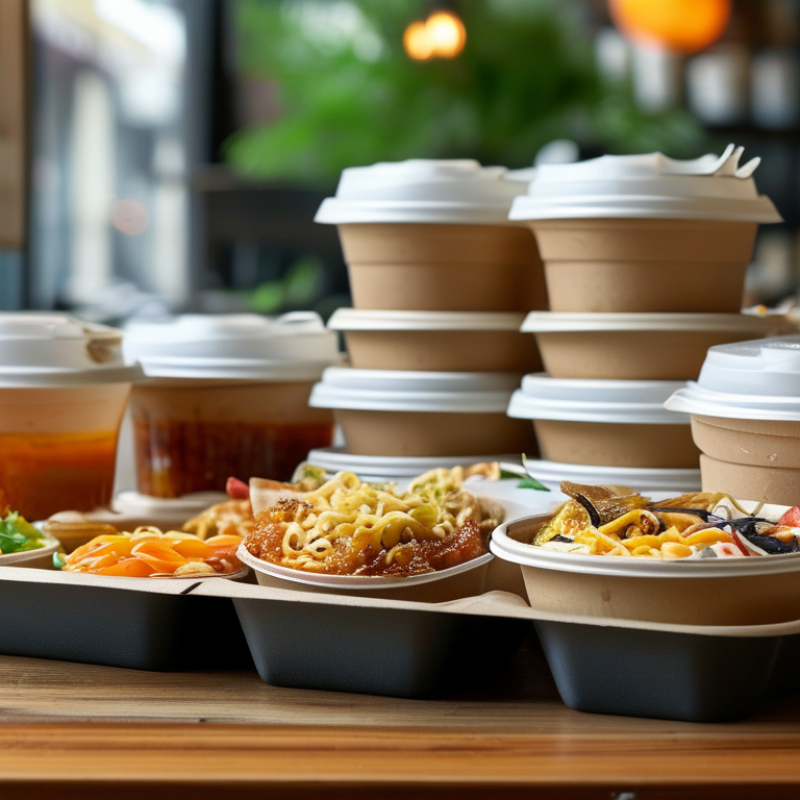
Choosing To Go Containers for international markets involves more than comparing prices and attractive designs. A container that performs well in a busy New York café may fail in a humid Southeast Asian delivery network. Buyers must examine material safety, heat resistance, leak prevention, stackability, and customer expectations before placing large orders. Small details matter. A loose lid can stain an entire delivery bag.

Experienced purchasing teams usually request samples and test them with real foods. Hot soup, oily noodles, chilled salads, and sauces reveal weaknesses quickly. Check whether the container bends, absorbs moisture, releases odors, or loses its seal during transport. Supplier documentation also deserves careful attention. Food-contact declarations, factory quality records, and test reports can support responsible decisions, but documents should be verified rather than accepted blindly.

Global sourcing adds further pressure. Minimum order quantities, shipping volume, storage space, printing quality, and regional recycling systems can change the true cost. Local regulations may also differ, so buyers should confirm current requirements with qualified compliance professionals. No single design suits every market. That is easy to forget. A cheaper package may create higher costs through leakage, complaints, or wasted stock. These ten practical tips will help buyers compare To Go Containers with clearer standards, stronger evidence, and realistic operating conditions. The goal is not simply to find packaging that looks good. It is to choose reliable containers that protect food, support efficient service, and remain suitable across borders. Mistakes still happen, even with careful planning. The important step is learning from testing before committing to a full shipment.

10 Tips for Choosing To Go Containers for Global Buyers

Understanding To-Go Container Types and Their Common Uses

Choosing to-go containers starts with the food, not appearance. A clamshell suits sandwiches, pastries, and dry meals because its hinged lid speeds service. A lidded bowl works better for soups, salads, noodles, and rice dishes. It supports separate toppings and reduces spills during delivery. Flat trays fit roasted meals and bakery items, while cups serve drinks, sauces, and small sides. Fit matters. An oversized container lets food slide, while a tight one can crush it.

Material changes performance. Paper-based containers feel light and suit moderate moisture, but sauces may soften them over time. Plastic containers handle wet foods and transport well, although heat tolerance and recycling access differ by market. Aluminum trays manage hot meals and oven-to-table service where permitted. Molded fiber can provide structure, yet oily foods may require a tested barrier. Never trust appearance alone. Test it.

Global buyers should check lid compatibility, ventilation, stack height, seal strength, and storage conditions. A vented lid can protect fried food from becoming soggy, while a sealed lid better protects soup. Ask suppliers for food-contact documentation, temperature ranges, leak tests, and sample cartons. In practice, the first sample is rarely perfect. Field tests may reveal buckling under warm curry or loose lids after cold storage. A good-looking option can still fail. Compare actual portions, transport time, and handling habits before approving large orders.

Comparing Materials, Durability, and Food Safety Standards

10 Tips for Choosing To Go Containers for Global Buyers

Comparing Materials, Durability, and Food Safety Standards

Global buyers should compare performance, not just appearance. A container must survive stacking, heat, moisture, and rough transport. Material choice affects leakage, recycling, and food-contact safety. Paper fiber suits dry foods, but sauces require tested barrier coatings. Polypropylene often tolerates heat well, while recycling access differs sharply between markets. No material wins every test.

The OECD Global Plastics Outlook reports that only 9% of plastic waste was recycled globally in 2019. This figure makes end-of-life planning essential. Buyers should request clear resin identification, recycling guidance, and local recovery data. Compostable materials also need recognized testing, such as EN 13432 or ASTM D6400. A compostable claim means little without suitable collection facilities.

Food safety deserves stricter evidence. The World Health Organization estimates that contaminated food causes 600 million illnesses and 420,000 deaths each year. Suppliers should provide migration-test results, declarations of compliance, and traceability records. Requirements may include EU Regulation 1935/2004, US food-contact rules, or equivalent national standards. Do not accept “food-safe” as complete proof. Ask about temperature limits, acidic foods, oils, and storage time. A practical trial should include drop, compression, seal-integrity, and heat tests. One successful microwave test is not enough. I would also revisit assumptions after shipment data arrives, because laboratory conditions rarely match a crowded delivery truck.

10 Tips for Choosing To Go Containers for Global Buyers - Comparing Materials, Durability, and Food Safety Standards

Comparative information reflects commonly used food-contact materials and typical performance characteristics. Actual limits depend on the formulation, construction, closure, intended food, and supplier test results.
Tip Decision Dimension Material or Format Durability and Use Conditions Food Safety and Compliance Checks End-of-Life Considerations Suitable Use Cases
1 Match the container to the food temperature PP, paperboard with a food-contact lining, or molded fiber Polypropylene is commonly selected for hot foods because it has a relatively high heat-resistance range among common food containers. Paperboard and molded fiber require a suitable barrier for hot, wet, or oily foods. Request migration and temperature-use data for the finished container, including the lid, coating, ink, adhesive, and other food-contact components. Do not rely on the resin name alone. Fiber formats may be recyclable or compostable only where the lining and local collection system allow it. PP is recyclable in some systems, but acceptance varies by country. Hot noodles, rice meals, soups, curries, and takeaway meals when the supplier confirms the relevant temperature limit.
2 Choose a material suited to the food chemistry PP, PET, HDPE, aluminum, or coated paperboard Acidic, salty, oily, or alcoholic foods can place greater demands on barriers and seals. PET and PP are often used for different food applications, but suitability must be verified for the specific formulation. Check testing with representative foods or simulants, especially for acidic or fatty foods. Verify that coatings and sealants are approved for the intended food type and contact time. A single-material structure is generally easier to sort than a paper-plastic laminate or multi-layer package, although local recycling infrastructure remains decisive. Salads with dressing, tomato-based dishes, fried foods, sauces, desserts, and beverages requiring chemical compatibility.
3 Prioritize leak resistance and closure design Snap-fit lids, hinged lids, heat-sealed films, or threaded closures Leak performance depends on rim geometry, lid fit, seal pressure, stacking, vibration, and temperature changes. A rigid rim and properly matched lid generally improve transport reliability. Ask for leak, drop, compression, and seal-integrity test methods. Confirm that the sealant and lid materials are food-contact compliant and do not shed particles into the food. A compatible lid and base made from the same polymer can simplify recycling compared with permanently attached mixed materials. Soups, gravies, liquid sauces, beverages, delivery orders, and meals transported over longer distances.
4 Evaluate impact and stacking strength Rigid PP, PET, HDPE, aluminum, or reinforced fiberboard Review wall thickness, ribbing, flange strength, compression resistance, and performance after filling. Containers should be tested in realistic stacked and refrigerated or heated conditions. Physical damage can compromise food safety by exposing food or breaking the closure. Require finished-packaging quality controls, not only raw-material declarations. Using the minimum material needed for required strength can reduce packaging weight, but excessive lightweighting may increase failure, waste, and product loss. Meal delivery, catering, airline meals, warehouse storage, and export shipments with repeated handling.
5 Confirm regulatory documentation for the destination market Any food-contact material, including plastics, paper, coatings, inks, and adhesives Documentation should cover the exact finished article and intended conditions of use, not merely a general statement for a similar material. For the United States, commonly relevant plastic provisions include applicable sections of Title 21 of the Code of Federal Regulations, such as 21 CFR 177.1520 for olefin polymers and 21 CFR 177.1630 for PET. In the European Union, check Regulation (EC) No 1935/2004 and, for plastics, Regulation (EU) No 10/2011. Other markets may apply additional national requirements. Environmental claims should be supported separately from food-contact compliance. A package can be food-safe without being recyclable or compostable in a particular market. Cross-border procurement, private-label packaging, imported food service items, and products sold in multiple regulatory regions.
6 Check reusable-container requirements Thick-wall PP, stainless steel, glass, or other validated durable formats Reusable containers need resistance to repeated washing, detergents, heat cycles, impact, staining, and odor absorption. Define a tested service life rather than assuming unlimited reuse. Request cleaning validation, repeated-use testing, and instructions for maximum temperature, dishwasher use, and inspection. Damaged, crazed, or heavily scratched items may need removal from service. Reuse can reduce single-use packaging only when return rates, washing systems, transport distances, and replacement rates support the intended life-cycle benefit. Closed-loop food-service programs, workplace cafeterias, schools, events, and local delivery networks.
7 Distinguish recyclable from compostable claims PP, PET, paperboard, molded fiber, or certified compostable polymers Compostable or fiber containers may require specific moisture, heat, or grease barriers. Confirm that performance remains adequate during the complete serving period. Food-contact approval and compostability certification are different requirements. In Europe, EN 13432 is a recognized reference for industrial compostability criteria; equivalent local standards may apply elsewhere. “Compostable” generally does not mean home-compostable or accepted in every municipal system. Recyclability depends on material design, sorting, collection, and reprocessing capacity. Events, institutional catering, takeaway meals, and markets with a verified local recycling or industrial-composting route.
8 Assess barrier performance for shelf life Barrier-coated paperboard, PET, PP, EVOH-containing structures, or aluminum Oxygen, moisture, grease, aroma, and light barriers affect texture, freshness, and leakage. Barrier performance should be tested under the planned storage temperature and duration. Ask for declarations covering coatings, adhesives, tie layers, and printing inks. For sensitive foods, review overall migration and relevant specific-migration or extractables data where required. High-barrier multi-layer structures can be difficult to recycle. Use the simplest structure that meets the required shelf-life and safety target. Prepared salads, bakery products, chilled meals, sauces, high-fat foods, and products requiring controlled moisture or oxygen exposure.
9 Verify labeling, traceability, and batch control All container types and components Traceable production lots help identify defects such as warped rims, weak seals, delamination, odor transfer, or inconsistent dimensions. Request a specification sheet, declaration of compliance where applicable, lot identification, manufacturing date, material composition, intended-use conditions, and quality-control records. Food-contact symbols and recycling marks must be used appropriately for the destination market. Material identification markings can support sorting, but markings do not guarantee that a local facility accepts the package. International purchasing, regulated food operations, safety audits, recalls, and multi-site food-service networks.
10 Run practical performance testing before volume purchase Selected container, lid, seal, label, and secondary packaging as a complete system Test filled samples for hot-fill or chilled use, stacking, drop impact, vibration, refrigeration, reheating if applicable, and opening by the intended user. Record failure rates and dimensional changes. Use representative foods and contact times, then compare results with the supplier’s compliance documentation. Confirm that microwave, oven, freezer, or dishwasher claims are specifically supported rather than inferred. Measure product loss, rejected units, transport damage, and actual disposal routes alongside material weight. Preventing food waste is part of packaging sustainability. Any global launch, especially where climate, logistics, regulations, serving temperatures, or user behavior differ between markets.
Buyer reminder: Food-contact suitability is determined by the finished packaging article and its intended conditions of use. Always obtain current supplier documentation and confirm requirements with the competent authority or qualified regulatory professional in each destination market.

Selecting Sizes, Shapes, and Features for Different Foods

Tip 1: Match the container size to the actual serving.

A 500 ml container may suit rice bowls, salads, or pasta portions. Larger meals need extra headspace, especially when sauces are added. For soup, leave about 15% empty space to reduce spills during delivery. Too much empty space can make food slide and look unappealing.

Tip 2: Let the food shape guide the container shape.

Rectangular containers stack efficiently and fit neatly in delivery bags. Round tubs work better for soups, curries, and foods with thick sauces. Long, shallow boxes protect sandwiches and flat pastries. I have learned that narrow bases can make noodles difficult to lift, even when the capacity seems correct.

Tip 3: Choose depth according to food movement.

Deep containers protect soft foods during transport. Shallow containers help fried items release steam and stay crisp. Compartments can separate vegetables from sauces, but they also reduce usable space. This trade-off is easy to miss.

Tip 4: Select practical features, not decorative extras.

Secure closures, leak-resistant rims, and clear labels support safer handling. Vent holes may protect crispy foods, but they can reduce heat retention. Test the lid after filling the container, not before. A lid that feels firm in a showroom may loosen during delivery.

Tip 5: Check market requirements and run small trials.

Food-contact rules differ across regions, so buyers should request material and safety documentation. Test containers with real portions, sauces, stacking, and temperature changes. Small trials reveal problems faster. I once underestimated sauce leakage; the design looked reliable until it traveled across town.

Checking Sustainability, Customization, and Regulatory Compliance

Global buyers should inspect to-go containers beyond appearance and unit price. A sustainable choice begins with material evidence, not green wording. Ask for recycled-content percentages, food-contact declarations, and current test reports. Check whether the container matches local collection systems. A compostable lid is ineffective where industrial composting is unavailable. Small details matter. Measure wall strength with hot soup, oily rice, and condensation. In my experience, weak corners create more waste than expected. Sustainability claims can also be difficult to compare across suppliers.

Customization should solve a handling problem, not merely decorate packaging. Confirm dimensions, vent placement, stacking tolerance, closure pressure, and print durability. Request a physical sample before approving large production. Test it after refrigeration, transport vibration, and ten minutes of holding time. A beautiful logo means little if the lid leaks. Ask about minimum order quantities and tooling ownership. These details affect cash flow and future flexibility. I have learned that buyers often over-customize early, then regret slow replenishment.

Regulatory compliance requires market-specific documents. Verify food-contact rules, migration testing, labeling language, recycling marks, and restricted substances for each destination. Do not rely on one certificate for every country. Check report dates, laboratory scope, and the exact material and color tested. Keep batch records and supplier declarations accessible. Importers should confirm temperature limits and intended-use statements. Requirements change, and online summaries may be outdated. A careful review may delay launch, but a rejected shipment costs more. That trade-off deserves honest planning.

Evaluating Suppliers, Costs, Shipping, and Quality Control

A supplier’s polished website proves very little. Ask for factory registration, production photos, recent test reports, and two customer references. Review the sample carefully. Check lid fit, wall thickness, odor, surface finish, and leakage after filling. A video call can reveal storage conditions and actual equipment. It is not perfect evidence, but it improves judgment.

Compare quotes using the same specifications. Include material, size, printing, tooling, minimum order quantity, payment terms, and replacement policy. The lowest unit price may hide expensive molds or weak cartons. Calculate landed cost, including freight, insurance, duties, inspection, and warehouse handling. Ask suppliers to separate every charge. Keep a written quotation. Memories become unreliable.

Shipping needs practical testing. Request carton dimensions, gross weight, pallet patterns, and loading photos. A container can look spacious before cartons are stacked. Confirm the shipping route, estimated transit time, document requirements, and seasonal delays. Leave a time buffer. Small savings can create large delays. For quality control, create a specification sheet with measurable tolerances. Check samples before production, inspect during production, and arrange a final inspection before shipment. Record batch numbers and inspection results. Food-contact documentation should match the destination market’s requirements.

Do not rely on one inspection. Independent checks can still miss defects. Review complaints by defect type, then adjust the specification. Suppliers should explain corrective actions with evidence, not promises. A useful supplier is transparent when something goes wrong. That matters more than a flawless presentation.

10 Tips for Choosing To Go Containers for Global Buyers

Practical procurement scorecard showing how global buyers can prioritize supplier evaluation, cost control, shipping, and product quality when selecting to-go containers.

The percentages represent a practical purchasing framework: quality, food-contact compliance, and delivery reliability should receive the greatest weight, while cost and sustainability remain essential decision factors.