Contact Us

Phone
08 8294 8664

Email
sale@awdmedical.com

Address

How to Choose Joovv Red Light Therapy in 2026?

Choosing Joovv Red Light therapy in 2026 takes more than comparing panel sizes or promotional claims. The right setup should fit your space, routine, and goals. A narrow panel beside a desk feels very different from a full-body unit mounted in a bedroom. Small details matter.

Photobiomodulation researcher Dr. Michael Hamblin describes the field this way: “Photobiomodulation is the use of light to stimulate, heal, regenerate, and protect tissue.” That broad definition is not a promise of a specific result. It is a useful reminder to look closely at the device’s wavelengths, treatment area, recommended distance, and session guidance. A larger panel may cover more skin, but it may also cost more and need a dedicated place. Convenient? Not always.

This guide will help you compare Joovv models, understand red and near-infrared light, and assess practical features such as mounting, controls, and warranty terms. It will also separate measurable specifications from claims that deserve a second look. Evidence and individual responses can vary, so a polished product page should not replace careful judgment or advice from a qualified healthcare professional. Your routine matters, too. The best choice is one you can use consistently and comfortably, with realistic expectations. We’ll start with the questions worth asking before you buy.
How to Choose Joovv Red Light Therapy in 2026?

Define Joovv Photobiomodulation: Red and Near-Infrared Light (660/850 nm)

Photobiomodulation (PBM) uses red or near-infrared light to influence biological activity without relying on intense heat. A 660 nm wavelength falls in the red range; 850 nm is near-infrared and is invisible to the eye. Red light is often used for more superficial targets, while near-infrared can travel farther into tissue. Actual delivery depends on skin, body composition, distance, and device output.

A Cochrane review of 16 trials involving 820 people with neck pain reported short-term pain relief from low-level laser therapy. However, treatment protocols varied, so those results do not prove that every 660/850 nm device works equally well. Wavelength is only one part of the picture. Irradiance, exposure time, and fluence—the energy delivered per area—also matter. I still find wavelength charts a little too neat; real tissue is less predictable.

Tips: Check the device’s measured irradiance and recommended distance, not just its wavelength. Keep sessions consistent, and track skin comfort and any changes. More light is not automatically better.

Compare Joovv Models by Panel Size, LED Count, and Treatment Coverage

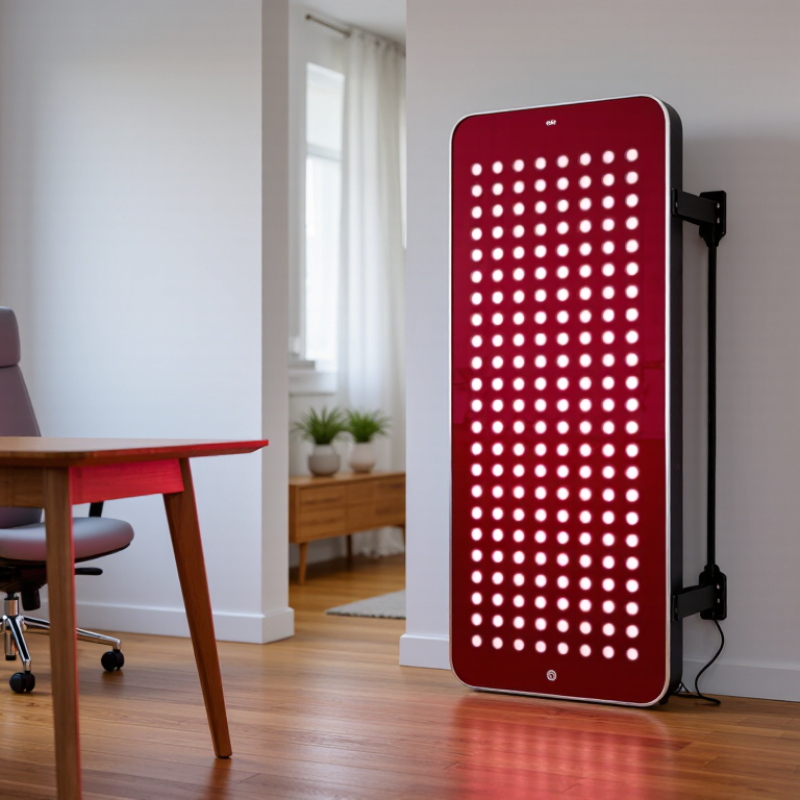
Choosing a red-light panel in 2026 starts with the space you want to treat. A compact panel may suit a desk-side routine or a small area, while a wider unit can cover more of the torso at once. Measure the distance between your usual standing position and the wall. A panel that looks large online can feel surprisingly narrow in a room.

Compare LED count alongside panel dimensions, not by itself. More LEDs do not automatically mean better coverage or stronger results. Check how the lights are arranged, the stated treatment area, and the recommended distance. If two panels list similar LED counts, the larger one may spread light across a broader surface. Still, product specifications can use different measurement methods, so compare like with like. Read the details carefully.

Think about how you will actually use it. For a small treatment area, a compact panel may be easier to position and store. For more even coverage across the back or legs, a larger panel can reduce repositioning. That convenience matters. But larger units take more room and may cost more to operate or mount. I would also check the return policy and warranty before deciding; specs rarely tell the whole story, and my own room measurements are not always perfect.

Assess Irradiance and Dose: J/cm² = W/cm² × Exposure Time

How to Choose Red Light Therapy in 2026?

Irradiance describes power delivered per area; dose describes accumulated energy. The useful conversion is J/cm² = W/cm² × exposure time in seconds. For example, 50 mW/cm² equals 0.05 W/cm²; at that measured intensity, 120 seconds delivers 6 J/cm². Check whether a device reports irradiance at the treatment distance, not just at the panel. A few centimeters can change the reading. WALT’s published dose recommendations are specific to treatment indications, not universal home-use targets. Research protocols also vary, so a higher dose is not automatically better.

Tips: Measure at skin level with a calibrated meter when possible. Record distance, session time, and the device’s stated wavelength. If irradiance is listed in mW/cm², divide by 1,000 before using the formula. Keep the same setup between sessions. Simple, but easy to overlook.

A calculated dose is only as reliable as its irradiance measurement. Sensor type, beam uniformity, and positioning can affect the result; a panel’s center reading may not represent the light reaching your whole treatment area. WALT’s indication-specific dose tables offer useful context, but they do not replace clinical guidance. Even careful math leaves uncertainty. Use the manufacturer’s safety directions, avoid extending sessions to compensate for unclear output, and reassess if your skin feels uncomfortably warm.

How to Choose Red Light Therapy in 2026: Assess Irradiance and Dose

Illustrative dose calculations for a five-minute exposure at different irradiance levels.

Dose (J/cm²) = irradiance (W/cm²) × exposure time (seconds). For example, 40 mW/cm² for 300 seconds gives 12 J/cm². These are illustrative calculations, not treatment recommendations; actual irradiance at the skin depends on distance, measurement method, and device conditions.

Match 660 nm Red and 850 nm Near-Infrared Light to Your Goals

How to Choose Red Light Therapy in 2026?

Match the wavelength to your goal, not just the panel’s advertised power. Red light around 660 nm is commonly selected for superficial targets, such as skin. Near-infrared light around 850 nm can reach deeper tissue more readily, making it a frequent choice for muscle and joint comfort. Neither wavelength guarantees a result. The 2017 review by Michael Hamblin in AIMS Biophysics describes how photobiomodulation may affect cellular signaling, while also noting that responses depend on factors such as wavelength and dose. That distinction matters. A bright panel is not automatically a better panel.

Check the measured irradiance at your actual treatment distance, then follow the device’s exposure instructions. The World Association for Photobiomodulation Therapy’s 2010 dose recommendations vary by treatment site and condition; they do not offer one universal setting for home use. Keep sessions consistent, protect your eyes as directed, and record changes in comfort or skin appearance over several weeks. Small details count: distance from the panel, session length, and whether you use it on bare skin. I’d be cautious about choosing a device based on a single impressive number. Evidence is still developing, and personal response can be uneven. Sometimes, the honest answer is “not sure yet.”

Review FDA Device Status, Safety Guidance, and Clinical Evidence Before Buying

Before buying a red-light therapy panel, check the exact device’s FDA status. Registration or listing does not mean FDA clearance or approval. Search the model name and confirm what the agency has actually authorized, if anything. That distinction matters. A device cleared for one use should not be assumed effective for another.

Read the safety instructions as carefully as the product claims. Note the recommended distance and session time; a chair placed too close can change exposure. Use eye protection when the manual requires it, and ask a clinician about treatment if you take light-sensitive medication or have an eye or skin condition. Small details count. If instructions are vague, that is a reason to pause, not guess.

Clinical evidence depends on the condition, wavelength, dose, and study quality. Research on one treatment protocol may not apply to a home panel with different settings. Look for peer-reviewed human studies, not just testimonials or before-and-after photos. I would not treat a polished chart as proof; even published studies can be small or short. Compare the device’s stated output and treatment guidance with the research, and keep expectations modest. Redness, warmth, or discomfort should prompt you to stop and review the instructions or seek medical advice.

How to Choose Joovv Red Light Therapy in 2026? - Review FDA Device Status, Safety Guidance, and Clinical Evidence Before Buying

Evaluation area What the evidence and regulations say What to check before buying
FDA device status FDA status applies to a specific device and its stated intended use. Some light-based devices have FDA clearance for particular indications; that does not mean every red-light product is cleared or that FDA has established every advertised benefit. Ask for the exact device name, FDA submission or clearance number, and cleared indication. Verify the record in the FDA 510(k) database. Do not treat “FDA registered” or “FDA listed” as equivalent to FDA clearance or approval.
Clearance versus approval A 510(k) clearance generally means FDA found a device substantially equivalent to a legally marketed predicate for its intended use. FDA approval is a different pathway, generally used for higher-risk devices. Neither term supports claims beyond the device’s authorized labeling. Match the wording of the FDA record to the use you want. Be cautious of claims that imply clearance for conditions not named in the record.
Evidence for skin concerns Studies of visible red and near-infrared light report possible improvements in some skin outcomes, including signs of photoaging, but study methods, devices, treatment schedules, and results vary. Evidence for acne depends on the light type and device; results from one treatment cannot automatically be applied to another. Look for controlled human studies on the same type of device and the specific outcome you care about. Treat photos and testimonials as marketing, not proof of a predictable result.
Evidence for pain or other conditions Photobiomodulation has been studied for several clinical uses, but findings are condition- and protocol-specific. Research on one wavelength, dose, body area, or clinical setting does not establish that a consumer panel treats every pain condition or disease. Check whether clinical studies match the intended condition, treatment area, wavelength, dose, and schedule. Do not use light therapy instead of prescribed care without consulting a qualified clinician.
Wavelength and dose information Light response depends on factors such as wavelength, irradiance, exposure time, distance, and treatment area. A higher advertised power figure alone does not establish better results or a safer, effective dose. Look for clearly stated wavelength ranges, irradiance measurement conditions, recommended distance, session duration, and exposure guidance. Avoid relying on unsupported “more power is better” claims.
Eye safety Bright LEDs can cause discomfort or potential eye hazards depending on exposure and device design. Follow the device’s labeling and instructions; eye protection may be required, particularly when directed by the manufacturer. Check whether protective eyewear is specified or supplied and whether the instructions describe safe positioning and exposure. Do not stare into the light source.
Photosensitivity and health conditions Some medicines and medical conditions can increase sensitivity to light. Individual risk varies, and a home device’s instructions may identify additional warnings or exclusions. Review the full contraindications and warnings. Ask a clinician or pharmacist before use if you take photosensitizing medication or have a condition that may affect light sensitivity.
Treatment expectations Outcomes may vary, and evidence does not establish a guaranteed result for every user. A device’s directions and any FDA-cleared indication define its intended use, not a promise of benefit. Compare the expected treatment schedule, return policy, warranty, and total cost. Be wary of claims promising rapid, permanent, or universal results.
Sources for verification FDA 510(k) Premarket Notification database  |  FDA: How to Study and Market Your Device  |  American Academy of Dermatology: Red light therapy  |  American Academy of Dermatology: Light and laser acne treatments

General consumer information only. FDA status and evidence should be verified for the exact device and intended use; this table is not medical advice.