Contact Us

Phone
08 8294 8664

Email
sale@awdmedical.com

Address

How to Choose a Full Face Radiotherapy Mask in 2026

Choosing a Full Face Radiotherapy Mask in 2026 is not simply a matter of selecting the most secure-looking design. The right option depends on the treatment area, planning requirements, equipment, and the patient’s ability to tolerate immobilization. Radiation oncology teams assess these factors before treatment, often using imaging and a fitting session to check how the mask supports a repeatable position. Small details matter: pressure around the cheeks, visibility through the eye area, access near the nose or mouth, and how easily the mask can be removed. Fit is personal.

A well-fitted mask can help limit movement during treatment, but it should not be judged by appearance alone. Ask the clinical team how the mask is made, what adjustments are possible, and what to do if it feels too tight or causes distress. Comfort matters, too. A mask may feel restrictive at first, and that reaction is worth discussing rather than ignoring. No design suits everyone. Materials, manufacturing methods, and clinic protocols can vary, so online descriptions cannot confirm whether a particular mask is appropriate for an individual treatment plan. This guide explains the main selection points and questions to raise with qualified professionals. The final choice should be based on clinical advice, careful fitting, and clear communication—not marketing claims.
How to Choose a Full Face Radiotherapy Mask in 2026

Understand the Purpose and Scope of a Full-Face Radiotherapy Mask

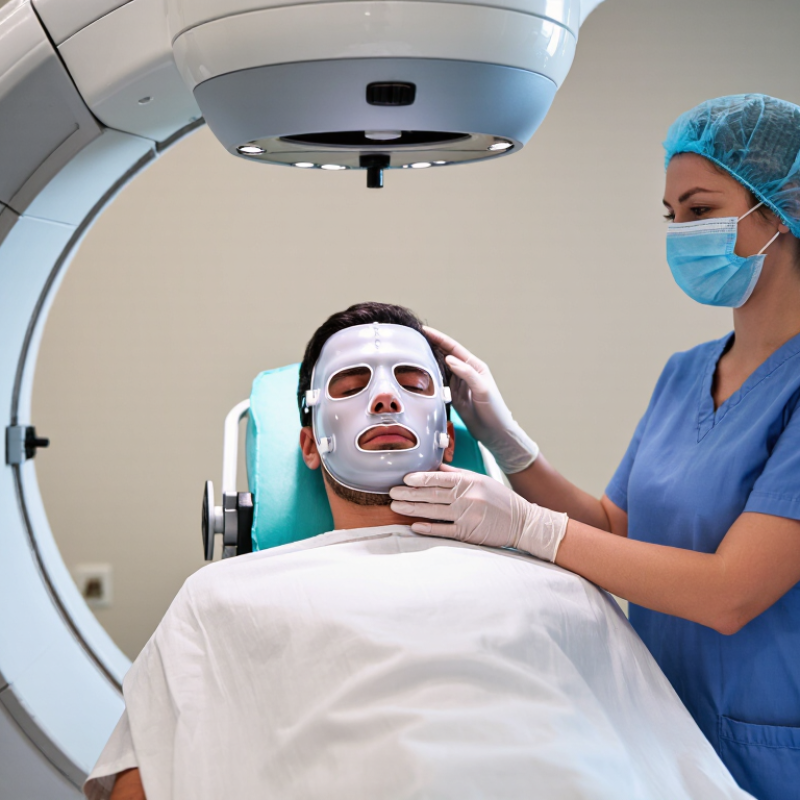
A full-face radiotherapy mask is an immobilization aid, not a shield. It helps keep the head and face in a repeatable position while the treatment team plans and delivers radiation. Depending on the treatment area, the mask may extend from the forehead to the chin and include openings around the eyes, nose, or mouth. Its coverage is chosen for the treatment plan, not simply for appearance.

During fitting, warmed thermoplastic mesh is shaped to the patient’s face and secured to a treatment board. It should feel snug, but breathing and communication must remain manageable. The team checks the fit and uses imaging or other positioning checks according to the clinic’s protocol. Small shifts can matter. The mask alone does not confirm accurate treatment positioning or determine where radiation is given.

The scope of a full-face mask varies. Some treatment sites need broader coverage; others may be managed with a smaller mask or a different setup. The radiation oncologist and therapy team can explain why a particular design is recommended and whether glasses, dental appliances, or other items should be removed during fitting. The first fitting may feel awkward, and adjustments may be needed. That is worth mentioning openly. A mask should be assessed by the clinical team, especially if it causes pain, panic, or difficulty breathing.

Compare Mask Designs, Materials, and Immobilization Levels

A full-face radiotherapy mask covers the forehead, cheeks, and chin, helping limit head movement during treatment. Compare it with open-face designs, which leave more of the face visible but may suit some patients better.

Thermoplastic masks are warmed, molded, then cooled around the patient; the fit should feel secure, not painful.

A tight mask is not automatically a better mask.

Small gaps near the nose or jaw can matter, so ask the clinical team to check contact and comfort in the treatment position.

Material and fixation level affect both stability and dose. AAPM Task Group 176 reports that immobilization equipment can alter delivered dose; measured effects depend on material, beam angle, and setup, and may approach 10% in some configurations.

This is a reason for the radiation team to account for the mask during planning, not a reason to choose one design from a number alone.

A three-point mask often offers less restraint than a five-point or full-face system. More fixation may help when motion risk is high, but can increase pressure and anxiety.

Be specific: mention tender skin, dental appliances, or trouble breathing through the nose.

Fit first. The perfect mask is not always obvious.

Review reproducible positioning and daily image guidance with the team, because a mask that looks rigid can still allow small shifts.

Assess Treatment Needs, Anatomy, Comfort, and Clinical Constraints

Choosing a full face radiotherapy mask starts with the treatment plan, not the mask alone. The team considers the target area, prescribed position, imaging needs, and how beams must reach the treatment site. A mask should limit movement without covering or obstructing required access. Small setup differences matter.

Anatomy affects fit. The clinician and radiotherapy staff check the forehead, nose bridge, cheeks, jaw, and chin for pressure points or gaps. Hair, facial swelling, dental changes, and limited neck movement can alter how the mask sits. Tell the team if you have trouble breathing through your nose, feel claustrophobic, or cannot lie comfortably. These details can guide adjustments or a different immobilization approach.

Comfort matters, but it is not the only measure. The mask must hold your head consistently while allowing the planned treatment and imaging. During fitting, notice tightness near the eyes, uneven pressure, or difficulty swallowing. Speak up. A snug fit may feel unfamiliar, and that discomfort deserves discussion rather than quiet endurance. Still, a softer or looser fit may not provide the stability your plan requires. The final choice should reflect your anatomy, treatment goals, and clinical judgment, with the radiation oncology team explaining any trade-offs.

Review Mask Fitting, Imaging, and Compatibility with Treatment Equipment

A full-face radiotherapy mask should fit the patient and the treatment room workflow. During fitting, check that the forehead, cheeks, and chin rest evenly without pressure points. The patient should be able to keep the same position while the mask is secured. A snug fit is useful; numbness or pain is not. Confirm that the mask’s indexing points match the couch, and test clearance through the gantry’s full rotation. Small chin movement can matter.

Imaging checks should include the planning CT and, where used, daily cone-beam CT or MRI. Verify that the face remains visible enough for reliable alignment and that mask material does not obscure key anatomy. AAPM Task Group 176 reports that immobilization-device attenuation can approach 10% in some beam and device configurations; material, thickness, and beam angle all matter. AAPM Task Group 142 sets a 2 mm imaging-to-treatment coordinate coincidence tolerance for relevant imaging systems. These figures support local measurement, not assumptions about every mask.

Tips: Test the actual mask with the intended couch, imaging system, and beam angles before treatment. Check comfort again after imaging. A neat first fit can still shift later; that deserves a second look.

How to Choose a Full Face Radiotherapy Mask in 2026

A practical review checklist for mask fitting, imaging, and treatment-equipment compatibility.

How to read this chart: Bars count the review points listed for each category; they are not clinical performance scores or a ranking of mask types.

  • Mask fitting (4): Confirm comfortable fit, reproducible positioning, adequate treatment-area coverage, and access for communication or release.
  • Imaging (3): Review visibility and artifacts on planning images, consistency between simulation and image-guidance setup, and usable positioning landmarks.
  • Equipment compatibility (3): Check the immobilization-base interface, clearance with the treatment and imaging equipment, and compatibility with the department’s setup workflow.

Use the treating team’s protocols and verify compatibility for the specific patient, imaging system, and treatment setup.

Discuss Selection, Adjustments, and Follow-Up with the Radiation Oncology Team

Choosing a full-face radiotherapy mask should involve your radiation oncologist and treatment therapists. Ask why this mask suits your treatment area and whether another immobilization option is appropriate. The team can explain how the mask helps you hold a consistent position and what you may feel during fitting. A clear answer matters.

During fitting, notice pressure around your forehead, cheeks, jaw, or chin. Tell the therapist if you feel pain, restricted breathing, panic, or trouble keeping still. The first fit may not feel perfect, and that is worth saying plainly. Small details count. Do not cut, stretch, or reshape the mask yourself; ask the team to assess any needed adjustment.

At follow-up visits, mention new soreness, skin irritation, swelling, or changes in how the mask sits. Therapists may check your positioning and make adjustments when clinically appropriate. If you feel anxious before treatment, ask about practical ways to manage the appointment, such as a pause signal or a step-by-step explanation. It can feel awkward to speak up about mild discomfort, but even a small pressure point may affect how comfortably you lie still. Bring your questions to the radiation oncology team, and tell them if your symptoms change between visits.