How to Choose the Right Position Sensor for Your Needs?
Selecting the right Position Sensor is a crucial decision for many industries. These sensors are integral to automation, robotics, and machinery. According to a recent report by MarketsandMarkets, the global position sensor market is expected to reach $9.23 billion by 2025, growing at a CAGR of 7.6%. This growth reflects the rising demand for precise motion control.
Industry expert Dr. Sarah Thompson emphasizes, "Choosing the right Position Sensor can drastically improve system efficiency." Understanding the different types and their applications can significantly impact performance. For instance, while linear sensors are ideal for measuring position along a straight path, rotary sensors excel in rotational applications. However, not all sensors are equal. Many fall short in providing adequate resolution or speed, which can lead to costly errors.
In a landscape filled with options, it is challenging to identify the ideal sensor. The specifications can be overwhelming. Factors such as accuracy, range, and environmental conditions must be carefully considered. An ill-fitted sensor may jeopardize the entire project. This highlights the importance of a well-informed decision in choosing the right Position Sensor for your needs.
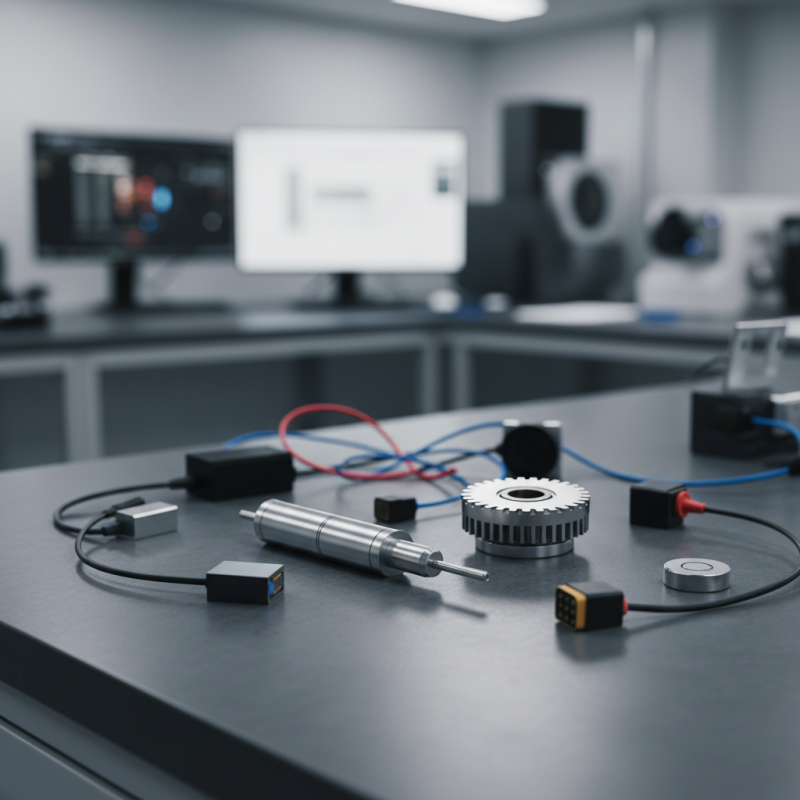
Understanding Different Types of Position Sensors and Their Applications
Position sensors are vital in various applications, measuring the position of objects accurately. Understanding the types helps in making informed choices. Generally, there are two main categories: linear and rotary position sensors. Linear sensors track linear motion, while rotary sensors monitor rotational movement.
Different technologies are used in these sensors. For instance, potentiometric sensors are simple and cost-effective. However, they wear out over time, leading to accuracy issues. In contrast, inductive sensors offer reliability but may be more expensive. Capacitive sensors can differentiate between materials but might require calibration to work effectively.
Applications vary widely. Linear sensors are found in robotics, while rotary ones are common in motors. Each sensor type has its strengths but also limitations. You might find that one works well in theory, but it may underperform in specific environments. Evaluating where and how you'll use the sensor is crucial.
Evaluating Key Specifications for Position Sensor Selection
When selecting a position sensor, several specifications demand your focus. Start with the measurement range. It defines how far or close the sensor can detect an object. For example, a short-range sensor may only work effectively within a few centimeters. However, if your application requires greater distances, long-range sensors provide excellent options.
Accuracy is another key specification. Different sensors deliver varying levels of precision. For critical applications, choose sensors with high resolution. Keep in mind the trade-off: high accuracy often comes with increased costs. If your project has a limited budget, consider whether you can compromise on precision.
Tips: Always check the environmental conditions. Some sensors cannot function in extreme temperatures or in harsh conditions. Right placement also impacts performance. Allow enough space for the sensor to operate without obstruction. Reflect on the installation process. Complexity can lead to errors if not managed well. Choose user-friendly designs whenever possible. This consideration can save you from future headaches.
Assessing Environmental Factors Impacting Sensor Performance
When selecting a position sensor, environmental factors play a crucial role. Temperature, humidity, vibration, and exposure to chemicals can all affect sensor accuracy and longevity. For instance, temperature variations can lead to sensor drift, impacting precision. Reports show that 30% of sensor failures occur due to extreme environmental conditions. Understanding these influences is essential for making the right choice.
Tips: Consider the operating temperature range specified by manufacturers. Ensure it aligns with your application. Checking for certifications related to environmental resistance is also valuable.
Vibrations can cause misreadings. Sensors installed in machinery may perform poorly if not designed for such conditions. Statistics indicate that sensors not rated for vibration may fail 25% sooner than expected. Assessing the potential for mechanical shock is vital. It can save time and costs in the long run.
Tips: Choose vibration-resistant sensors when necessary. They may be more durable and reliable in challenging settings. Evaluate the sensor's material composition, as it should withstand environmental stress effectively.
How to Choose the Right Position Sensor for Your Needs? - Assessing Environmental Factors Impacting Sensor Performance
| Sensor Type | Measuring Range | Accuracy | Response Time | Temperature Range | Environmental Protection Rating |
| Hall Effect Sensor | 0 to 100 mm | ±0.5 mm | 1 ms | -40°C to 85°C | IP67 |
| Potentiometer Sensor | 0 to 360 degrees | ±1 degree | 5 ms | -20°C to 70°C | IP54 |
| LVDT (Linear Variable Differential Transformer) | 0 to 50 mm | ±0.1 mm | 2 ms | -40°C to 120°C | IP68 |
| Inductive Sensor | 0 to 20 mm | ±0.2 mm | 0.5 ms | -25°C to 70°C | IP67 |
| Optical Sensor | 0 to 100 mm | ±0.05 mm | 0.1 ms | 0°C to 50°C | IP67 |
Cost Considerations and Budgeting for Position Sensor Implementation
When considering position sensors, budgeting is crucial. It's easy to overlook costs in the early stages. However, a detailed budget can prevent future financial strain. According to recent industry research, the global position sensor market is expected to reach over $2 billion by 2025. This growth reflects the increasing demand across various sectors like automotive and robotics.
Choosing the right sensor impacts cost significantly. Some sensors are more expensive due to advanced features, while others are budget-friendly but may lack accuracy. For example, an entry-level potentiometer can cost under $50, while a high-precision magnetic encoder can exceed $500. Knowing where to invest is vital.
Sometimes, cheaper options can lead to higher operational costs later, particularly if they require frequent replacements or maintenance.
Additionally, installation and integration costs should not be ignored. Setting up a complex system may require skilled labor, which adds to expenses. A surprising statistic shows that nearly 30% of companies underestimate these costs. So, planning for the total expenditure is vital. Making informed decisions today can minimize risks and ensure successful implementation of position sensors in the long run.
Integrating Position Sensors with Other Systems and Technologies
Integrating position sensors into various systems can enhance functionality and efficiency. When considering integration, assess compatibility with existing technologies. Position sensors can work alongside PLCs, motor controllers, and IoT devices. Ensuring that communication protocols align is crucial for seamless operation. Take time to research how different sensors interact with your specific setup.
Tip: Always validate sensor output before full integration. Testing with dummy loads can help prevent future complications. Sometimes, what works on paper may not function as expected in practice.
Another point to consider is the environment where sensors will be used. Harsh conditions can impact sensor performance significantly. Choose sensors rated for temperature, humidity, and other factors relevant to your application. Evaluating these aspects will guide you toward more sustainable solutions.
Tip: Regular maintenance checks on integrated systems can prevent costly downtimes. Identify weak links through periodic assessments. Reflection on past integrations can provide valuable lessons for future projects.