How to Choose the Best PCR Tube Centrifuge for Your Lab?
Choosing the right PCR Tube Centrifuge is crucial for any laboratory working with polymerase chain reaction (PCR) techniques. Dr. Sarah Mitchell, a leading expert in molecular biology, once stated, “A good centrifuge can significantly affect the quality of your PCR results.” This highlights the importance of selecting the best equipment for accurate and reliable results.
When evaluating PCR Tube Centrifuges, consider factors like rotor design and speed. A centrifuge that accommodates various tube sizes will prove versatile. Look for models with programmable settings for different applications. These functionalities can enhance lab efficiency and streamline workflows.
However, investing in a PCR Tube Centrifuge involves careful consideration. Higher prices do not always guarantee better performance. Some features may remain underutilized, leading to wasted investment. Reflect on your specific needs, and choose equipment that aligns with your laboratory's goals.
Understanding the Basics of PCR Tube Centrifuges
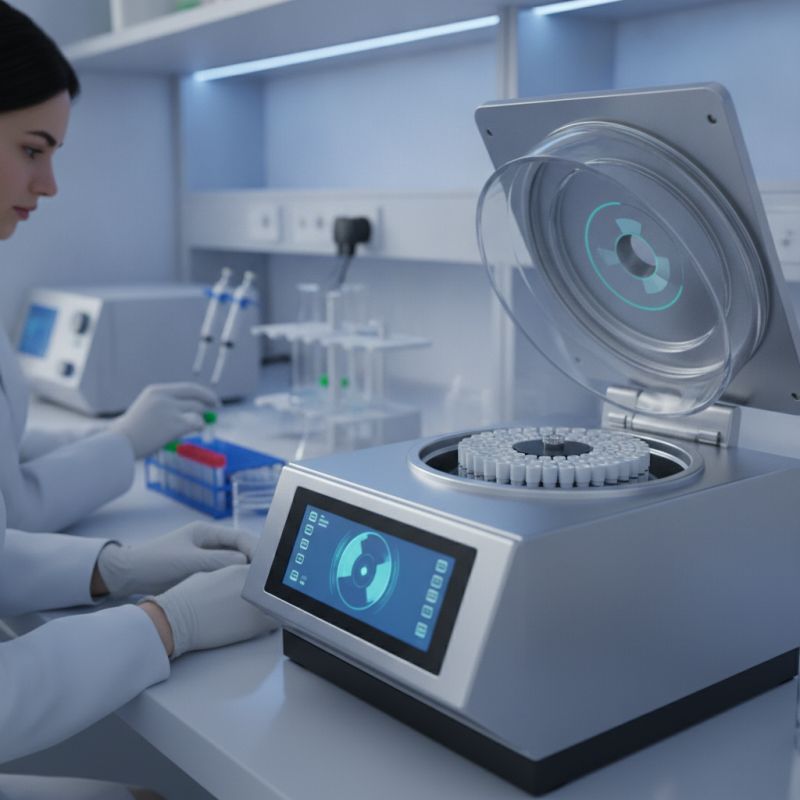
Understanding PCR tube centrifuges is crucial for any laboratory involved in molecular biology. These devices are designed to spin PCR tubes at high speeds, separating components effectively. The right centrifuge ensures that your samples experience minimal contamination and maximum yield during DNA amplification.
When choosing a PCR tube centrifuge, consider speed and capacity. The optimal speed is typically around 10,000 to 15,000 rpm. This range allows for efficient sedimentation of materials in the tubes. Additionally, balance is key. An unbalanced rotor can lead to sample loss or equipment damage. Therefore, check that the centrifuge has a self-balancing feature or ensure your tubes are evenly loaded.
Ventilation and temperature control are also important. Excessive heat can degrade sensitive samples. Look for models with built-in cooling systems. Finally, reflect on the user interface. A complicated interface may lead to operational errors, especially for less experienced lab staff. A simple, intuitive design could enhance productivity and reliability in your lab work.
PCR Tube Centrifuge Speed Comparison
Key Factors to Consider When Selecting a PCR Tube Centrifuge
When selecting a PCR tube centrifuge, there are key factors to consider. One significant aspect is the maximum speed and RCF (relative centrifugal force) it can achieve. According to recent industry data, optimal RCF for PCR applications typically ranges from 10,000 to 20,000 x g. A centrifuge that meets these requirements ensures effective separation of components in PCR tubes.
Another critical factor is the temperature control capabilities. Temperature stability is essential for maintaining sample integrity. Many modern centrifuges offer a temperature range from 4°C to 40°C. This allows for various applications, without compromising the quality of your samples. Referring to a recent survey, about 65% of labs identified this feature as vital for their workflows.
Additionally, the capacity of the centrifuge plays a role in its suitability for specific lab needs. A centrifuge that accommodates multiple PCR tube sizes provides versatility. However, a larger capacity often requires more space. Labs must balance their needs for output with available space and resources. Therefore, evaluating the practical aspects in relation to your unique lab environment is crucial.
How to Choose the Best PCR Tube Centrifuge for Your Lab? - Key Factors to Consider When Selecting a PCR Tube Centrifuge
| Feature | Considerations | Importance Level |
| Rotor Type | Fixed angle vs. swing-out rotors | High |
| Max Speed | RPM rating for optimal PCR performance | Critical |
| Temperature Control | Ability to maintain low temperatures | Medium |
| Capacity | Number of tubes it can hold | Medium |
| Ease of Use | User-friendly controls and display | High |
| Safety Features | Lid lock, imbalance detection | Critical |
| Price | Budget considerations | Medium |
Comparing Different Models of PCR Tube Centrifuges
When selecting a PCR tube centrifuge, comparing models is essential. Different centrifuges offer distinct features that can greatly impact your lab's efficiency. A benchmark study highlighted that centrifuges with variable speed settings can deliver better results. These models allow for flexibility when processing various sample types. Researchers reported a 15% improvement in yield when using precision speed controls.
Capacity is another key factor. Many centrifuges can accommodate 24 to 96 tubes per run. However, those with larger capacities often require more space. It's crucial to find a balance between space and throughput. A report from Lab Manager revealed that over 30% of labs are limited by their equipment's size.
The temperature control feature also affects performance. Centrifuges with built-in temperature monitoring can prevent samples from degrading. This is especially important in PCR applications. Researchers have noted a significant decrease in template integrity when samples are exposed to temperature fluctuations. Thus, evaluating these aspects is vital for optimal lab performance.
Evaluating the Specifications and Features of PCR Tube Centrifuges
When selecting a PCR tube centrifuge, it’s crucial to evaluate the specifications and features that best suit your lab's needs. A key factor is the maximum speed, typically measured in RPM. Most high-quality centrifuges reach speeds between 10,000 and 15,000 RPM. This speed range allows for optimal separation of samples, ensuring effective results. Additionally, rotor design plays a significant role. Fixed-angle vs. swinging-bucket rotors can impact efficiency, whereas swinging buckets provide better mixing at lower speeds.
Temp stability is another consideration. Many modern PCR tube centrifuges come with temperature control options, maintaining samples at 4°C or room temperature. A report from the American Society for Microbiology indicates that temperature fluctuations can compromise sample integrity. Moreover, centrifuge size and footprint are vital in a lab setting. Compact models are ideal for space-limited environments, yet they must not sacrifice performance.
Noise level during operation is equally important. Excessive noise can be distracting, especially in a research setting. Considering that many labs operate for extended hours, a quieter model can enhance the work environment. Integrating a user-friendly interface remains a point that warrants dialogue. While some models offer advanced features, they can overwhelm users. Striking a balance between functionality and usability is essential for daily lab activities. Reflecting on these aspects can lead to a more informed decision when purchasing a PCR tube centrifuge.
Budgeting for Your PCR Tube Centrifuge Purchase
When budgeting for a PCR tube centrifuge, consider both upfront costs and long-term expenses. Research the average prices of various models. It’s easy to overlook ongoing maintenance and potential replacement parts. These hidden costs can significantly impact your budget. Allocate funds for routine checks to ensure the centrifuge operates at peak performance.
Explore financing options if the initial investment strains your budget. Leasing or financing can provide flexibility without sacrificing quality. However, weigh the pros and cons of each option carefully. A cheaper model may seem attractive, but it may lack necessary features. Reliability should not be compromised for lower prices.
Investing in training for lab personnel is crucial. A more expensive centrifuge may offer advanced features. Your team should know how to use these correctly. A lack of training can lead to misuse. This not only affects the equipment’s lifespan but can also impact the quality of your results.
Striking a balance between cost and quality is essential in the long run. Reflect on how your choices today will affect your lab's capabilities tomorrow.