How to Buy Tms Machine for Your Business Needs?
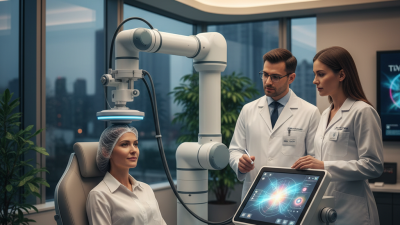
When considering how to buy a TMS (Transcranial Magnetic Stimulation) machine for your business, it is essential to grasp its significance in the mental health field. Research indicates that TMS therapy can lead to a 58% improvement in depression symptoms, according to the American Psychiatric Association. As more practitioners recognize its efficacy, the market is expected to grow significantly, reaching an estimated $1.5 billion by 2025.
Investing in a TMS machine involves understanding technical specifications and treatment protocols. It's crucial to evaluate the device's efficacy, safety features, and maintenance needs. Moreover, researching reputable vendors ensures you receive reliable equipment. The decisions can be daunting; many first-time buyers report feeling uncertain about their choices and the long-term benefits of their investment.
Furthermore, the cost of these machines varies widely, with some models exceeding $100,000. Therefore, businesses must weigh their budget against potential ROI. Engaging with seasoned professionals and accessing industry reports can provide valuable insights. They can alleviate doubts and promote confidence in your decision to buy a TMS machine, aligning with your business goals and patient needs.
Understanding TMS Machines: Types and Their Applications
When considering a TMS machine for business use, it's essential to understand the different types available. TMS, or Transcranial Magnetic Stimulation, machines vary in design and application. The two main types are neurostimulators and research-based machines. Neurostimulators are geared towards therapeutic processes, while research devices focus on scientific exploration. According to a report from the National Institute of Mental Health, TMS has proven effective in treating major depressive disorder in about 50% of patients.
Choosing a TMS machine necessitates evaluating your specific requirements. For instance, if your focus is on mental health treatments, a neurostimulator may be beneficial. However, if you're involved in clinical research, a more advanced model should meet your needs. Keep in mind that advanced models often involve higher costs and complexity.
Regarding practical tips, consider the training and support offered with the machine. A knowledgeable provider can enhance your understanding of usage and protocols. Also, evaluate the machine's compatibility with existing systems in your facility. Accessibility matters too. If a device is difficult to use, it may not yield the desired outcomes. The investment in a TMS machine should result in substantial benefits for your practice.
Key Considerations for Selecting the Right TMS Machine for Your Business
When selecting a TMS machine for your business, consider several crucial factors. Think about your operational requirements.
What specific tasks will the machine perform? Understanding the functionalities you need is essential. It helps you narrow your choices.
Consider the size and weight of the machine. Will it fit your workspace? Assessing your physical setup can save you from future inconveniences.
You should evaluate the machine's user interface. Is it intuitive? Complex machines can require extensive training.
That can hinder productivity. Look for features that enhance functionality. Does the machine allow for customization?
Flexibility can be a significant advantage. Also, think about maintenance. Some machines need frequent upkeep, while others are low-maintenance.
Factor in the cost of ongoing maintenance when budgeting.
Research the supplier's reputation. Are they known for reliability? Customer reviews can provide insights into both product quality and service.
Don't forget to check warranty and support options. A good warranty can protect your investment. Seek out resources or experts for advice.
Their experience can guide you in making the right decision. Choose wisely; the right TMS machine is an investment in your business's future.
Evaluating Performance Metrics: What to Look for in TMS Machines
When evaluating TMS machines, the focus should be on key performance metrics that align with your business needs. Look for ease of use, speed, and quality of output. Users often desire machines that are straightforward to operate, minimizing training time. Consider how quickly the machine can complete a task. Faster machines can greatly enhance productivity, making them essential for high-volume operations.
Explore the features that improve reliability. Machines with consistent performance are crucial. Unfinished tasks due to machine failure can lead to losses. Inquire about maintenance requirements and downtime. Sometimes, frequent service needs can be overlooked in the excitement of new technology.
Pay attention to the scalability of the TMS machine. Your business may grow, and so should your machine’s capabilities. Machines that can be upgraded or expanded are beneficial in the long run. Think about the total cost of ownership, including operational expenses and maintenance. It’s vital to invest in a machine that provides long-term value.
Evaluate user reviews and case studies, which can offer insights into real-world performance. Learning from the experiences of others helps identify potential pitfalls. Engage with communities and forums to gather diverse opinions. Making an informed choice is essential for achieving the best outcomes with your TMS machine.
Performance Metrics of TMS Machines
The above chart illustrates key performance metrics to consider when evaluating TMS machines for your business needs. These metrics include Efficiency, Throughput, Reliability, and Response Time, providing insights into machine performance.
Cost Analysis: Budgeting for TMS Machine Acquisition and Maintenance
Acquiring a Transcranial Magnetic Stimulation (TMS) machine represents a significant financial commitment for any business. The initial investment typically ranges between $50,000 and $100,000, depending on the machine's specifications and capabilities. Industry reports indicate that approximately 70% of healthcare facilities planning to integrate TMS cite budget constraints as a primary concern. This makes rigorous cost analysis crucial.
Understanding maintenance costs is equally important. Routine calibration and repairs can cost around 10-15% of the machine's price annually. Neglecting this can lead to more significant expenses over time. Moreover, training staff to operate and maintain the TMS machine adds another layer to total costs, often averaging $1,000 per employee. Companies should also consider the potential revenue generated from treatments—TMS sessions can range from $300 to $500. However, it is vital to reflect on market saturation. Not every clinic sees adequate patient turnover to maximize machine utilization.
Financing options, such as leasing versus purchasing, require careful consideration. Leasing may provide lower initial costs while purchasing allows for full control over the asset. Each approach bears its risks and advantages, and businesses should weigh these against their operational goals and client demand. An informed financial strategy will help ensure that the TMS investment yields sustainable growth over time.
Industry Trends and Innovations in TMS Technology You Should Know About
In recent years, Transcranial Magnetic Stimulation (TMS) technology has experienced significant advancements. The global TMS market is projected to reach USD 1.3 billion by 2025, growing at a CAGR of 6.9%. This growth indicates an increased reliance on TMS for mental health treatment. Continuous research shows that patient outcomes improve as technology evolves. Innovations like deep TMS and navigated TMS are optimizing treatment protocols, making sessions more efficient.
Additionally, the integration of artificial intelligence in TMS devices is on the rise. AI algorithms are now finetuning treatment parameters based on individual patient responses. This personalization can enhance efficacy, particularly for conditions like depression. However, not all facilities may have access to such advanced options. Awareness of these trends is crucial for business leaders in mental health.
With the evolving landscape, many practitioners face a dilemma. A balance between adopting cutting-edge technology and understanding its limitations is needed. The rapid pace of innovation may lead to inconsistent treatment standards. Therefore, continuous education and adaptability are vital for those investing in TMS machinery. Keeping abreast of industry developments will ensure businesses remain competitive and effective in addressing patient needs.