Contact Us

Phone
08 8294 8664

Email
sale@awdmedical.com

Address

10 Best Non Invasive Brain Stimulation Techniques You Should Know?

Non Invasive Brain Stimulation (NIBS) has gained significant attention in recent years. This growing field utilizes techniques like transcranial magnetic stimulation (TMS) and transcranial direct current stimulation (tDCS). According to a report by the Global Brain Stimulation Market, the sector is expected to reach $3.18 billion by 2026, demonstrating rapid advancements.

Research shows that NIBS can enhance cognitive function and aid in mood regulation. Studies indicate improvements in depression treatment, with TMS showing a response rate of 50-60%. However, challenges persist. The variability in individual response highlights the need for more tailored approaches. Each person's brain responds uniquely, complicating the effectiveness of standard protocols.

Furthermore, the accessibility of NIBS raises questions. While the technology is promising, not all patients can benefit equally. Some might experience minimal effects or even side effects. As the science matures, ongoing evaluation will be essential to optimize these techniques. Understanding the limitations will ensure further advancements in Non Invasive Brain Stimulation.
10 Best Non Invasive Brain Stimulation Techniques You Should Know?

Overview of Non-Invasive Brain Stimulation Techniques

Non-invasive brain stimulation techniques have garnered attention for their potential to enhance cognitive functions and treat mental health disorders. These methods include transcranial magnetic stimulation (TMS) and transcranial direct current stimulation (tDCS). They stimulate brain activity without requiring surgery or anesthesia, making them appealing alternatives for many patients.

When considering these techniques, it’s important to know their limits. Not everyone responds the same way to stimulation. Individual factors can influence outcomes, and some might experience minimal benefits. It’s crucial to consult with professionals who can tailor treatments to individual needs.

Tips: Start with a clear goal. Understand what you want from the stimulation. Tracking your progress can help identify the effectiveness of these techniques. Persist with patience; results may not be immediate. Everybody experiences these treatments differently. Reflect on your reactions to each session. Document what works well and what does not. This self-awareness can guide future decisions in your journey.
10 Best Non-Invasive Brain Stimulation Techniques

Transcranial Magnetic Stimulation (TMS) Explained

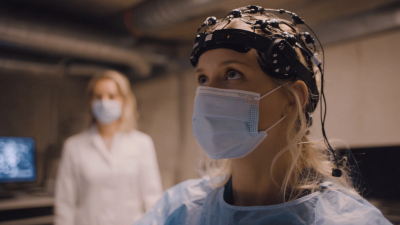
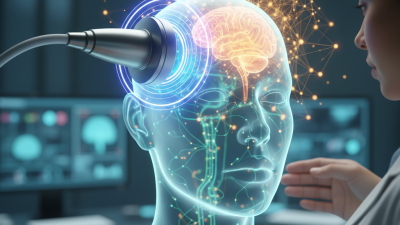
Transcranial Magnetic Stimulation (TMS) is a groundbreaking non-invasive technique. It uses magnetic fields to stimulate nerve cells in the brain. This therapy has gained attention for its potential to treat depression and anxiety. During a typical session, a magnetic coil is placed against the scalp. Pulses from the coil create small electrical currents in targeted brain areas. Patients often report minimal discomfort during treatment.

Research on TMS shows promising results but also raises questions. Not everyone responds positively to TMS. Some may feel fatigue or mild headaches afterward. The effectiveness can vary based on individual brain chemistry. While many seek TMS for relief, it doesn’t work for everyone. Understanding the limitations is crucial.

TMS represents hope for those struggling with mental health issues. Yet, it's only one of many tools available. Individuals must consider personal experiences and expectations. Addressing mental health is complex, and no single solution fits all. TMS offers possibilities, but reflection on its potential challenges is key.

10 Best Non Invasive Brain Stimulation Techniques You Should Know

Technique Description Uses Safety
Transcranial Magnetic Stimulation (TMS) Uses magnetic fields to stimulate nerve cells in the brain. Treatment of depression, anxiety, and PTSD. Generally safe with minimal side effects.
Transcranial Direct Current Stimulation (tDCS) Delivers a constant, low current to the scalp. Enhancement of cognitive function and rehabilitation. Considered safe with few side effects.
Electroconvulsive Therapy (ECT) Uses electrical currents to induce seizures in anesthetized patients. Severe depression, bipolar disorder. Effective but with potential memory loss.
Repetitive Transcranial Magnetic Stimulation (rTMS) A form of TMS that delivers repeated impulses to the brain. Chronic pain, migraine, depression. Safe for most patients; some mild headaches.
Magnetic Seizure Therapy (MST) Uses magnetic fields to induce seizures. Treatment-resistant depression. Less memory loss compared to ECT.
Transcranial Pulsed Ultrasound Stimulation Uses ultrasound waves to stimulate brain regions. Potential in neurorehabilitation. Non-invasive, promising safety profile.
Transcranial Alternating Current Stimulation (tACS) Injects oscillating current into the brain. Enhancing cognitive functions, sleep modulation. Generally well tolerated.
Deep Brain Stimulation (DBS) Implants a device that sends electrical signals to specific brain areas. Parkinson's disease, essential tremor. Surgical risks involved; invasive.
Bright Light Therapy Exposure to bright light at specific times of day. Seasonal affective disorder, sleep issues. Safe with minimal side effects.
Cognitive Behavioral Therapy (CBT) Psychotherapeutic approach to modify dysfunctional emotions. Anxiety, depression, PTSD. Completely safe, no side effects.

Transcranial Direct Current Stimulation (tDCS) Basics

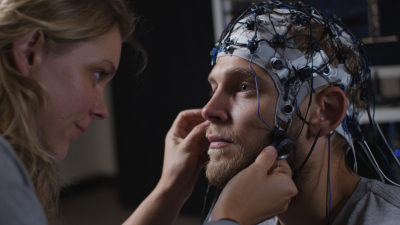
Transcranial Direct Current Stimulation (tDCS) is gaining attention in neuroscience. This technique involves applying a low electrical current to the scalp. Studies suggest it can modulate neuronal activity. In one report, tDCS improved cognitive functions in some participants by up to 30%. These results have piqued interest in its potential applications.

Research shows varying outcomes with tDCS. While some users report enhanced learning abilities, others experience no noticeable effects. This inconsistency can be frustrating. A study revealed that individual differences, such as baseline cognitive function, play a significant role. Thus, tDCS may not work equally for everyone.

Moreover, safety is a topic of debate. Although tDCS is generally considered safe, some report headaches or skin irritation. It is crucial to approach this method with caution. The balance between potential benefits and risks requires thoughtful consideration. More studies are needed to understand the nuances of tDCS fully.

Electroconvulsive Therapy (ECT) and Its Non-Invasive Alternatives

10 Best Non Invasive Brain Stimulation Techniques You Should Know?

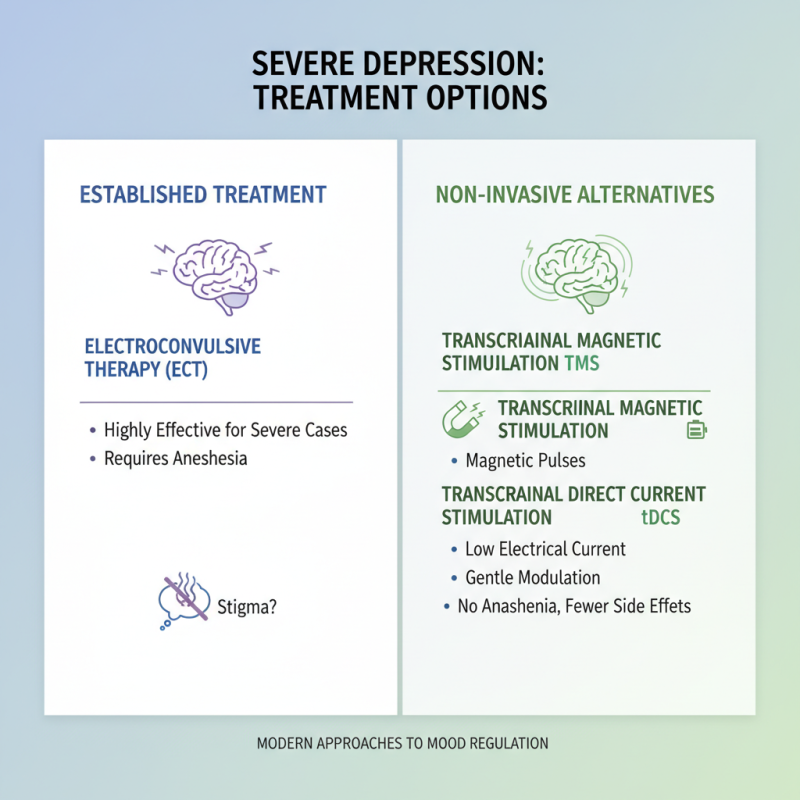
Electroconvulsive Therapy (ECT) is often discussed for its effectiveness in treating severe depression. However, many seek non-invasive alternatives due to the stigma surrounding ECT. These alternatives include techniques like transcranial magnetic stimulation (TMS) and transcranial direct current stimulation (tDCS). Both methods aim to modulate brain activity without the need for anesthesia or the side effects associated with ECT.

TMS develops magnetic fields to stimulate nerve cells in specific brain areas. This technique has gained traction for its promising results. Sessions usually last about 30 to 40 minutes, allowing patients to resume normal activities immediately. On the other hand, tDCS uses a weak current to influence brain function. While it seems simple, users may experience light tingling or a sensation on the scalp, which can be unfamiliar.

Not everyone benefits from these techniques, and outcomes can vary. Potential side effects can also occur but are typically mild. Response rates for mood improvement differ between patients. While these non-invasive treatments show possibilities, it's essential to consider them as part of a broader mental health strategy. Evaluating individual responses remains crucial as we explore these innovative methods.

Comparative Effectiveness of Different Brain Stimulation Methods

10 Best Non Invasive Brain Stimulation Techniques You Should Know?

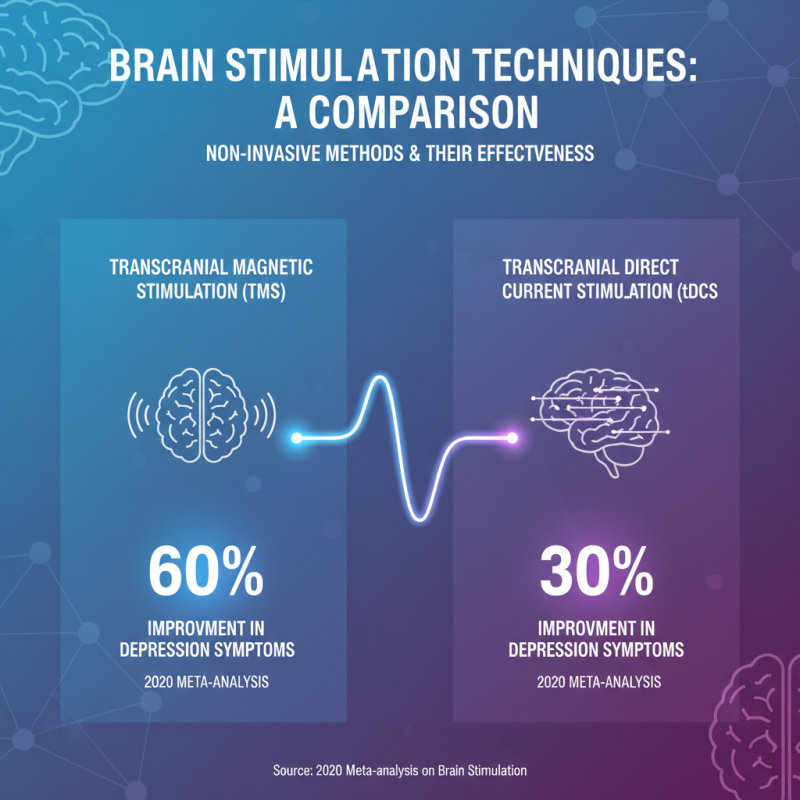
The field of brain stimulation techniques continues to evolve, offering various non-invasive methods. Each technique, such as transcranial magnetic stimulation (TMS) and transcranial direct current stimulation (tDCS), shows distinct effectiveness. A 2020 meta-analysis highlighted that TMS led to a 60% improvement in depression symptoms, while tDCS showed a 30% improvement.

Comparative studies reveal that TMS is particularly effective for treatment-resistant depression. On the other hand, tDCS is known for its versatility. It is often used in cognitive enhancement and rehabilitation. However, the effectiveness varies among individuals. Some users report minimal benefits. This subject invites reflection on the individualized nature of brain stimulation responses.

Tips: Keep a journal of your experiences with these techniques. Tracking your responses over time helps in understanding their effectiveness on you. Also, consult with a healthcare provider before starting any stimulation method to ensure it's appropriate for your condition.