
Best Powder Apple Cider Vinegar Supplier in China?
Choosing the best Powder Apple Cider Vinegar supplier in China takes more than comparing prices. The powder in a sample jar may look fine, yet its specification sheet tells only part of the story. Buyers should check the product’s apple cider vinegar content, carrier ingredients, moisture level, solubility, and batch-to-batch consistency. Ask for a current certificate of analysis and clarify whether testing is performed in-house or by an independent laboratory.
For this guide, fictional ingredient-quality adviser Lin Wei offers a practical reminder: “Trust the batch records, not just the sales sample.” This is an editorially created quote, not a verified interview. The point is simple. Request documents tied to a specific lot, and compare them with the product specification before placing an order. Ask how the powder is packed, how long production takes, and what minimum order quantities apply. Small details matter. A sealed sample pouch and a clear lot number can make evaluation easier.
A reliable supplier should answer technical questions without rushing you toward a purchase. It should also explain what its test results cover and where its ingredient data comes from. I would not treat one attractive sample as proof of long-term consistency; that assumption is easy to make and hard to defend. Request samples from more than one production batch when possible. Then compare appearance, aroma, taste, and mixing behavior under the same conditions. These checks can help buyers assess whether a Chinese supplier fits their formulation, documentation needs, and delivery schedule.
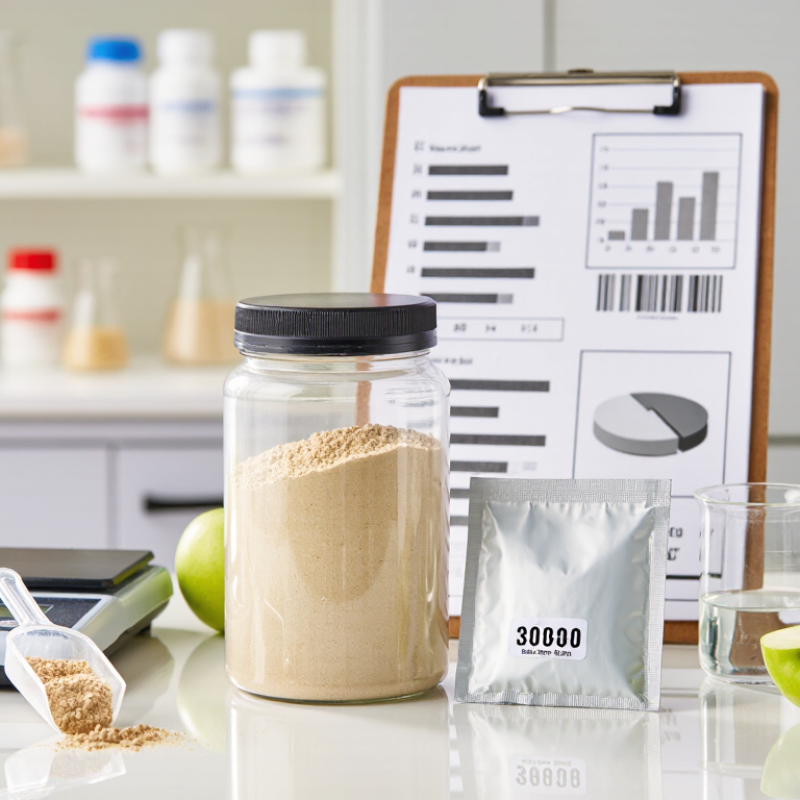
What Is Powdered Apple Cider Vinegar and How Is It Made?
Best Powder Apple Cider Vinegar Supplier in China?
What Is Powdered Apple Cider Vinegar and How Is It Made?
Powdered apple cider vinegar is not simply dried apple juice. Producers start with apple juice, ferment its sugars into alcohol, then convert the alcohol into acetic acid. The finished vinegar is concentrated and dried, often through spray drying with a carrier such as maltodextrin. The carrier helps form a free-flowing powder, but it also means the powder is not pure vinegar solids. Not quite.
Manufacturing details vary. Some suppliers use spray drying; others use freeze drying, which can affect cost, aroma, and solubility. A close look at the specification sheet should reveal the carrier content, acidity, moisture, and recommended storage conditions. In a sample, check whether the powder disperses evenly in water or leaves a gritty layer at the bottom. That small test can expose practical differences between products.
Grand View Research estimated the global apple cider vinegar market at USD 1.01 billion in 2023 and projected a 5.7% compound annual growth rate from 2024 to 2030. This figure covers the broader vinegar market, not powdered products alone. It signals interest, but it cannot verify a particular powder’s quality. Requesting a recent certificate of analysis and confirming the powder’s source and processing method remain sensible steps. I would still compare batch records; paperwork can look reassuring, yet details matter.
Best Powder Apple Cider Vinegar Supplier in China? — What Is Powdered Apple Cider Vinegar and How Is It Made?
| Topic | What It Means | Useful Buyer Check |
|---|---|---|
| What the powder is | A dried apple cider vinegar preparation. Many commercial powders include a carrier to help convert the liquid into a free-flowing powder. | Ask for the full ingredient list and the percentage or amount of carrier, if used. |
| Fermentation: first stage | Yeast ferments sugars in apple juice or cider, producing ethanol and other fermentation compounds. | Confirm that the supplier can document the raw material and manufacturing process. |
| Fermentation: second stage | Acetic acid bacteria convert ethanol into acetic acid in the presence of oxygen. This is the vinegar-making stage. | Request the product’s acidity or acetic-acid specification and the test method used. |
| Drying and powder formation | The vinegar preparation may be blended with a suitable carrier and dried, often by spray drying. Exact processing conditions and formulations vary by product. | Ask whether the powder is spray-dried or made by another process, and review the ingredient declaration. |
| Carrier ingredients | Carriers such as maltodextrin may be used to support drying, handling, and powder flow. The type and quantity are product-specific. | Check suitability for dietary, allergen, and labeling requirements in the intended market. |
| Acidity and assay | Powder acidity cannot be compared directly with liquid vinegar without considering the powder’s formulation, carrier content, and test method. | Request a specification and recent certificate of analysis (COA), including the assay basis and method. |
| Moisture and handling | Moisture content affects powder flow, clumping, and storage stability. Acceptable limits depend on the product specification. | Compare the stated moisture limit with the COA result; do not assume one universal limit applies to every powder. |
| Particle size and solubility | Particle size and dispersibility influence mixing and the finished product’s texture. Results depend on the grade and processing method. | Specify a sieve or mesh requirement if needed; an 80-mesh screen can be a buyer-defined target, not a universal industry standard. |
| Safety and quality testing | Relevant checks may include microbiological criteria, heavy metals, identity, and other tests required by the product specification and destination market. | Review a batch-specific COA and confirm testing requirements with the supplier and your regulatory adviser. |
| Choosing a supplier in China | A suitable supplier should be able to explain the formulation, provide consistent specifications, and support the documentation needed for the intended use and market. | Compare samples, specifications, batch records, facility documentation, export experience, and responsiveness before placing an order. |
| Packaging and shelf life | Moisture-resistant packaging can help protect a hygroscopic powder. Shelf life depends on formulation, packaging, and storage conditions. | Request the proposed packaging, storage instructions, and shelf-life evidence for the specific product. |
Specifications vary among products. Confirm each value against the supplier’s current product specification, batch-specific COA, and the requirements of the destination market.