
Contact Us

Phone
08 8294 8664

Email
sale@awdmedical.com

Address

5 Best Barite Drywall Radiation Shielding Suppliers?

Choosing among the 5 Best Barite Drywall Radiation Shielding Suppliers requires more than comparing prices. The right supplier should provide consistent barite density, documented testing, clear installation guidance, and dependable delivery. A shield that looks solid on paper may perform poorly if joints, penetrations, or wall thickness are overlooked.

Radiation-protection specialist Dr. Michael G. Stabin is often associated with a practical principle: “Radiation protection begins with understanding the source, the exposure, and the shield.” This idea fits Barite Drywall Radiation Shielding well. Product selection should follow the room’s radiation type, workload, distance, and required protection level. It should not begin with a catalog photograph.

Look closely.

A reliable supplier should explain lead-equivalent performance, panel dimensions, barite composition, moisture resistance, and fire-rating documentation. Independent laboratory reports matter. So do installation records from hospitals, imaging clinics, laboratories, and industrial facilities. Experience becomes visible in small details, such as neatly finished seams around conduits and properly supported heavy panels.

This review will examine five notable suppliers through those practical criteria. It will consider technical transparency, manufacturing consistency, customization, customer support, and overall value. No supplier is perfect. Some may offer excellent engineering but limited regional service. Others may provide competitive prices while giving less detailed certification information.

That uncertainty deserves attention.

Barite drywall is not a decorative upgrade. It is part of a controlled radiation-protection system. Final decisions should involve a qualified radiation physicist, architect, or shielding consultant. Even this comparison has limits, because project conditions differ widely. The strongest supplier is not always the cheapest one; it is the company that can support a safe, verified, and properly installed result.
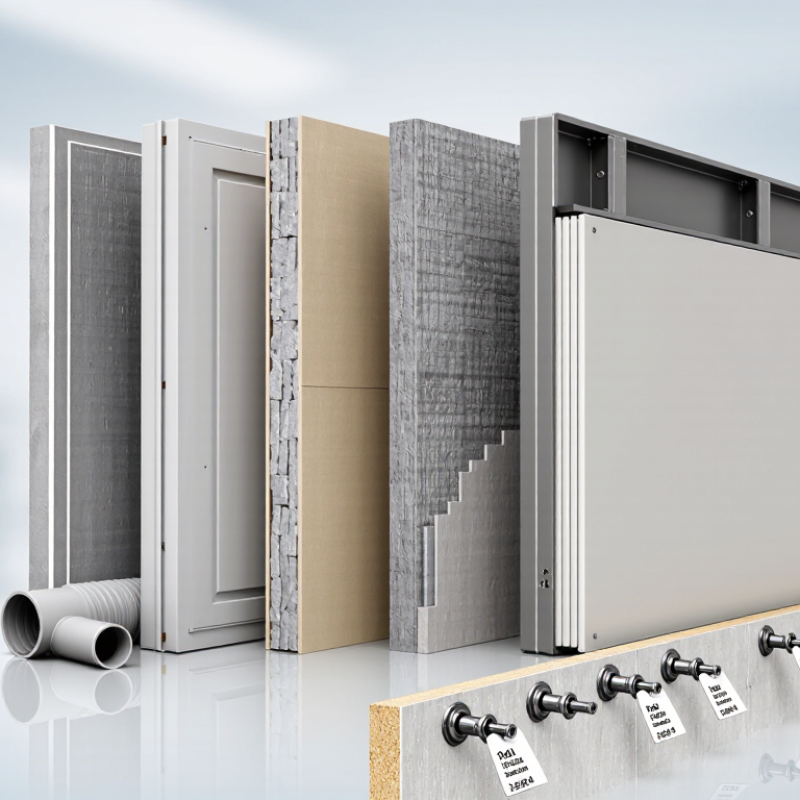
5 Best Barite Drywall Radiation Shielding Suppliers?

What Is Barite Drywall and How Does It Shield Radiation?

Barite drywall is a dense wall panel made with gypsum and barite, a mineral rich in barium sulfate. Its greater weight helps reduce the passage of diagnostic X-rays and some gamma radiation. Unlike ordinary drywall, it creates a stronger barrier within a smaller wall area. The shielding effect depends on panel thickness, density, radiation energy, and installation quality. More material is not always better.

In practice, panels are installed around imaging rooms, laboratories, or other controlled areas. Seams, corners, doors, windows, and service openings need careful treatment. Even a narrow unshielded gap can weaken the design. A qualified radiation physicist should calculate the required protection before purchasing materials. Product data should include density, thickness, tested performance, fire properties, and handling requirements. Reliable suppliers should also provide clear installation guidance and consistent quality records.

Tips: Ask for project-specific calculations, not a general “radiation-proof” claim. Check whether installers understand heavy-panel handling and joint treatment. Inspect sample panels for uniform thickness and damage. Keep delivery routes in mind; barite drywall can be surprisingly heavy. A finished wall may look secure, yet an overlooked cable opening can remain a practical weakness. Recheck the design when equipment changes, because higher operating energy may require different shielding.

Key Criteria for Evaluating Barite Drywall Suppliers

5 Best Barite Drywall Radiation Shielding Suppliers?

Key Criteria for Evaluating Barite Drywall Suppliers

Selecting a supplier requires more than comparing panel prices. Barite drywall should have consistent density, verified composition, and documented shielding performance. Ask for batch-specific test reports. Numbers matter. The report should identify areal mass, thickness, moisture content, and lead-equivalent performance across relevant X-ray energies. NCRP Report 147 states that shielding design depends on workload, distance, occupancy, and use factors, not wall thickness alone. A supplier offering only one generic attenuation value is a warning sign.

Independent testing also matters. Prefer laboratories using recognized methods and suppliers with traceable quality systems. IAEA Safety Reports Series No. 47 highlights the need to assess structural shielding during facility design, installation, and verification. The UNSCEAR 2020/2021 report places medical exposure near one-fifth of the world’s average radiation exposure, making reliable material selection important. Ask whether the supplier provides installation drawings, joint details, fastener guidance, and correction procedures for damaged panels. Poor seams can weaken an otherwise excellent wall. That gap matters.

Experience should be visible in project records, not vague claims. Request references for hospitals, imaging rooms, or industrial inspection facilities with similar energy ranges. Check dimensional tolerances and delivery controls, because warped panels create difficult joints. A supplier should also explain how recycled or reclaimed barite affects performance. I may be overcautious, but a polished brochure cannot replace a physicist’s calculation and on-site acceptance testing. Avoid suppliers who guarantee protection without reviewing the room layout, equipment workload, and occupancy beyond the barrier.

5 Best Barite Drywall Radiation Shielding Suppliers?

Key Criteria for Evaluating Barite Drywall Suppliers

This chart presents an illustrative procurement weighting for comparing barite drywall suppliers. Radiation attenuation testing and verified product density receive the highest weighting because shielding performance depends on material composition, thickness, and density. Certification, dimensional consistency, handling requirements, and delivery capability should also be reviewed before final selection. The percentages are evaluation weights, not supplier ratings.

Five Leading Barite Drywall Suppliers and Their Strengths

5 Best Barite Drywall Radiation Shielding Suppliers?

Five leading supplier profiles stand out during professional screening. A specialist manufacturer with in-house mixing offers consistent barite distribution and documented density tests. A regional fabricator provides faster delivery and cut-to-size service for hospital renovations. An engineering-focused supplier supports shielding calculations, drawing reviews, and installation guidance. A high-volume producer often offers stable pricing and dependable palletized shipping. A quality-led distributor keeps batch records, samples, and replacement procedures easy to access. These strengths matter when panels meet doors, corners, and service penetrations.

Ask each supplier for current test reports, product density, panel dimensions, and installation limits. Reliable suppliers explain whether their testing covers the finished drywall or only the raw barite compound. That difference matters. Request sample pieces before approving a large order. Feel the panel edges. Check surface flatness. Inspect packaging for crushed corners and moisture exposure. Good technical teams also discuss joint treatment, fastener placement, and weak points around electrical boxes.

Cost should not control the decision alone. A cheaper panel may require extra framing, slower installation, or expensive replacement work. Buyers sometimes trust attractive certificates without checking the project’s actual shielding design. I have seen this approach create avoidable uncertainty. Supplier experience is valuable, but independent verification still deserves space. Confirm local compliance requirements with qualified professionals before installation. Short lead times help. Clear documentation helps more.

5 Best Barite Drywall Radiation Shielding Suppliers? - Five Leading Barite Drywall Suppliers and Their Strengths

Supplier Profile Best-Fit Project Typical Panel Thickness Typical Barite Density Common Radiation Applications Primary Strength Key Verification Point
Supplier Profile 1
Standard-panel specialist
General diagnostic imaging rooms and renovation projects 12.5–25 mm Approximately 3.2–3.8 g/cm³ Diagnostic X-ray and dental X-ray areas Common sizes and straightforward installation Panel mass, dimensions, fastener guidance, and project-specific shielding calculations
Supplier Profile 2
High-density panel specialist
Facilities requiring greater shielding performance within limited wall space 15–25 mm Approximately 3.8–4.2 g/cm³ Higher-workload X-ray, CT, and fluoroscopy rooms Higher areal mass in a relatively compact panel format Declared density, areal weight, test method, and certified attenuation data
Supplier Profile 3
Custom-fabrication supplier
Hospitals with irregular layouts, penetrations, or prefabricated assemblies 12.5–25 mm; custom sizes available Approximately 3.2–4.2 g/cm³ X-ray rooms, isotope-handling support areas, and complex retrofit zones Cut-to-size panels and coordinated openings Dimensional tolerances, edge treatment, joint details, and shop-drawing approval process
Supplier Profile 4
Large-project logistics supplier
Multi-room healthcare projects and phased construction schedules 12.5–25 mm Approximately 3.2–4.0 g/cm³ Diagnostic imaging departments and medical expansion projects Batch consistency, palletized delivery, and installation sequencing Lot traceability, packaging integrity, delivery capacity, and storage requirements
Supplier Profile 5
Specification-support supplier
Projects requiring radiation-protection documentation and design coordination 12.5–25 mm; system-dependent Approximately 3.2–4.2 g/cm³ General X-ray, CT, fluoroscopy, and selected radiographic applications Technical submittals, installation details, and coordination with qualified radiation-protection experts Shielding report, workload assumptions, occupancy factors, distances, and applicable local regulations

Technical note: Barite drywall performance depends on panel thickness, barite density, areal mass, joints, penetrations, radiation energy, workload, distance, and occupancy. The density and thickness ranges above describe commonly specified market configurations; final shielding requirements should be calculated and approved by a qualified radiation-protection professional.

Comparing Product Quality, Certifications, Pricing, and Support

5 Best Barite Drywall Radiation Shielding Suppliers?

Choosing among five leading barite drywall suppliers requires more than comparing price lists. Product quality starts with consistent barite density, smooth panel surfaces, and accurate thickness. Ask for recent laboratory reports, batch numbers, and samples before placing a large order. Small differences matter.

Certifications provide useful evidence, but they do not replace technical judgment. Look for ISO 9001 quality systems, ASTM or EN test data, safety data sheets, and clear radiation attenuation results. Confirm whether testing covers the exact panel design, not only the raw material. A supplier with strong documentation usually supports architects and contractors more reliably. Still, paperwork can be incomplete.

Pricing should include panels, packaging, freight, installation guidance, and possible replacement costs. Compare quotes by square meter and shielding performance, not by sheet price alone. Dense panels may cost more, yet reduce redesign risks. Ask about minimum orders, production schedules, and export packaging. Delays can disrupt an entire imaging-room project.

Support often separates an acceptable supplier from a dependable one. Responsive technical staff should review room drawings, joints, penetrations, and fastening details. Request written answers, not vague promises. After-sales support also matters when panels arrive damaged or measurements change. I would not choose the cheapest option automatically. My own evaluation would score quality at 35%, certification at 25%, support at 25%, and total cost at 15%. That weighting may need adjustment for remote projects.

How to Choose the Right Supplier for Your Project

Choosing the right barite drywall radiation shielding supplier requires more than comparing prices. Ask for current technical data, material density records, safety documents, and batch testing results. The supplier should explain how barite panels perform at your specified thickness and radiation energy. A qualified radiation physicist must confirm the design.

Look for practical project experience. Can the supplier provide installation guidance, cutting details, joint treatment methods, and delivery schedules? A dependable team should understand hospitals, dental clinics, imaging rooms, and renovation limits. Request references from similar projects, not only large construction sites. Check whether each panel arrives undamaged, clearly labeled, and matched to the approved specification.

Details matter. Poorly sealed joints can undermine an otherwise strong wall. Ask how the supplier controls gaps around sockets, doors, pipes, and ventilation openings. Clear answers show technical competence. Vague promises do not.

My earlier supplier checklist focused too much on product density. That was incomplete. Storage conditions, installer training, replacement procedures, and technical support also affect performance. A low quotation may become expensive when panels arrive late or require unexpected changes. Ask who will respond when measurements differ on site. Get every important requirement in writing, including tolerances and inspection records. Some suppliers may provide impressive certificates, but certificates alone cannot replace project-specific review.